Visitors vs Visits: When We Get Our Own Language Wrong
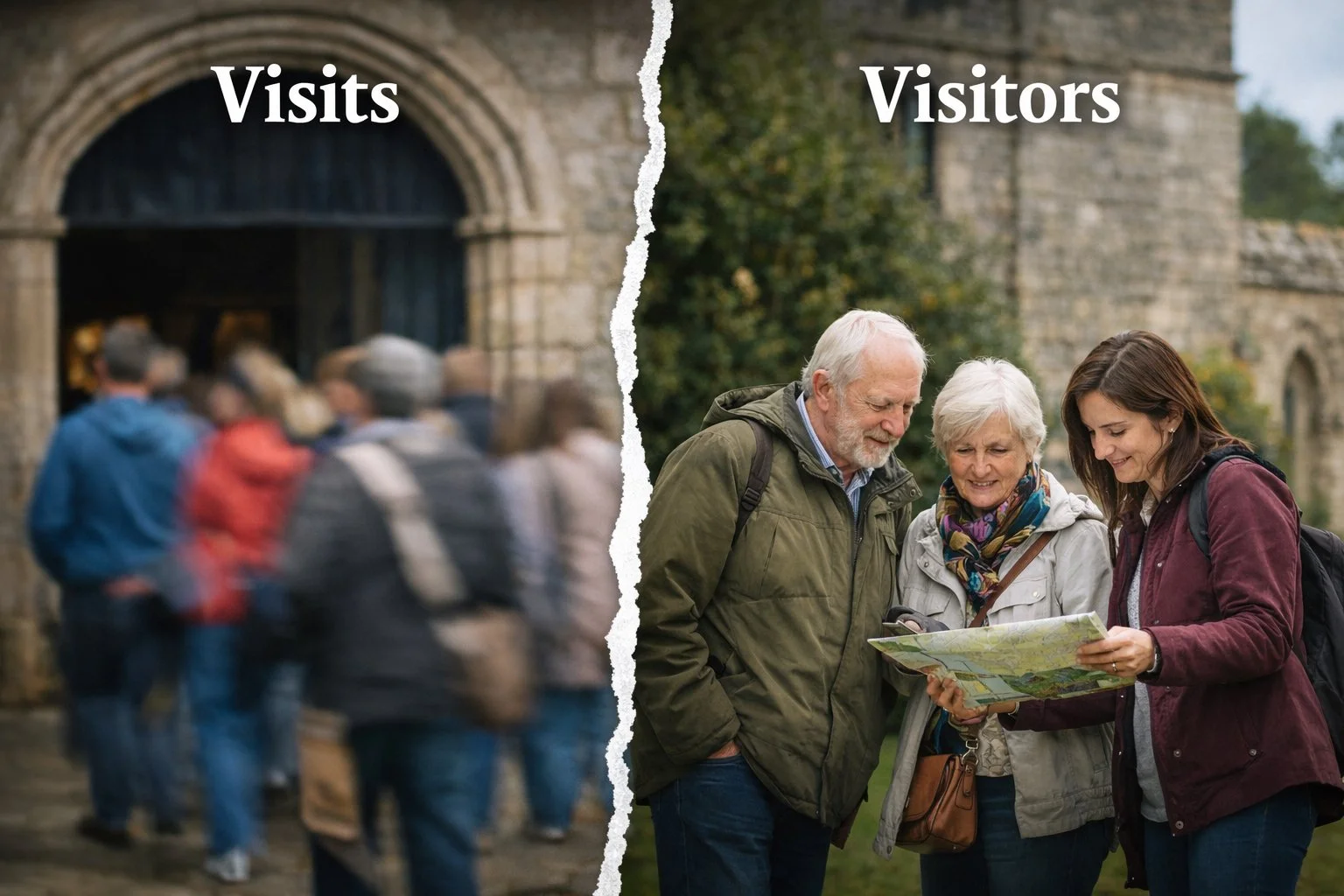
A recent publication by the Association of Leading Visitor Attractions refers to “visitor numbers”.
It’s a small thing.
But it’s also not.
Because there’s a fundamental difference between:
visitors (people)
visits (instances of attendance)
And when we blur the two, we start to misunderstand what’s actually happening in our places.
Three places. The same number. Completely different realities
Imagine three places, each reporting 60,000.
On paper, they look identical.
In reality:
One has 60,000 people visiting once
One has 15,000 people visiting twice and 30,000 visiting once
One has 10,000 people visiting three times, 10,000 visiting twice and 10,000 visiting once
All three might be reported as “60,000 visitors”.
They are not the same thing.
Three very different stories
These three scenarios tell three very different stories.
The first suggests:
strong reach
weak relationship
The second suggests:
emerging loyalty
something beginning to stick
The third suggests:
deep engagement
local relevance
a place that is part of people’s lives
This isn’t semantics. It’s strategy.
What we miss when we blur the two
If we collapse everything into “visitor numbers”, we lose sight of what really drives resilience and growth.
We can’t see:
whether people are coming back
whether we are building habit or just attracting one-off trips
whether our offer is deepening or just broadening
where our future income is likely to come from
And we end up asking the wrong questions.
“How do we get more people in?”
Instead of:
“How do we become somewhere people return to?”
What’s going on here
Partly, it’s practical.
Many organisations don’t have the systems to track individuals
Reporting frameworks simplify things
Benchmarks need consistency
But even where data is limited, clarity of thinking shouldn’t be.
Because once you’ve seen the difference, you can’t unsee it.
What to do about it (without overcomplicating things)
You don’t need a perfect CRM system to start understanding this better.
Even simple shifts can help:
Ask (and use) “Have you visited before?”
Look at frequency bands (once, twice, three times+)
Notice patterns in repeat behaviour
Combine ticketing data with what front-of-house teams are seeing and hearing
It’s not about precision.
It’s about intention.
The question underneath all of this
If you don’t understand the difference between visits and visitors, you can’t properly answer:
Are we building loyalty or just throughput?
Are we dependent on tourists?
Are we becoming more or less relevant to local people?
What does success actually look like for us?
And ultimately:
What kind of place are we becoming?
And finally
Language shapes thinking.
And thinking shapes decisions.
So this isn’t about correcting terminology for the sake of it.
It’s about being clear enough to make better choices.
If this has prompted you to think differently about your own numbers, you’re not alone.
Many of the organisations we work with arrive with strong data—but limited clarity about what it actually means for their future.
We help places step back, understand what’s really going on with their audiences, and make confident decisions about what to do next.
Take a look at our case studies to see how this plays out in practice
Or explore how we can help you build a clearer, more useful picture of your audiences
