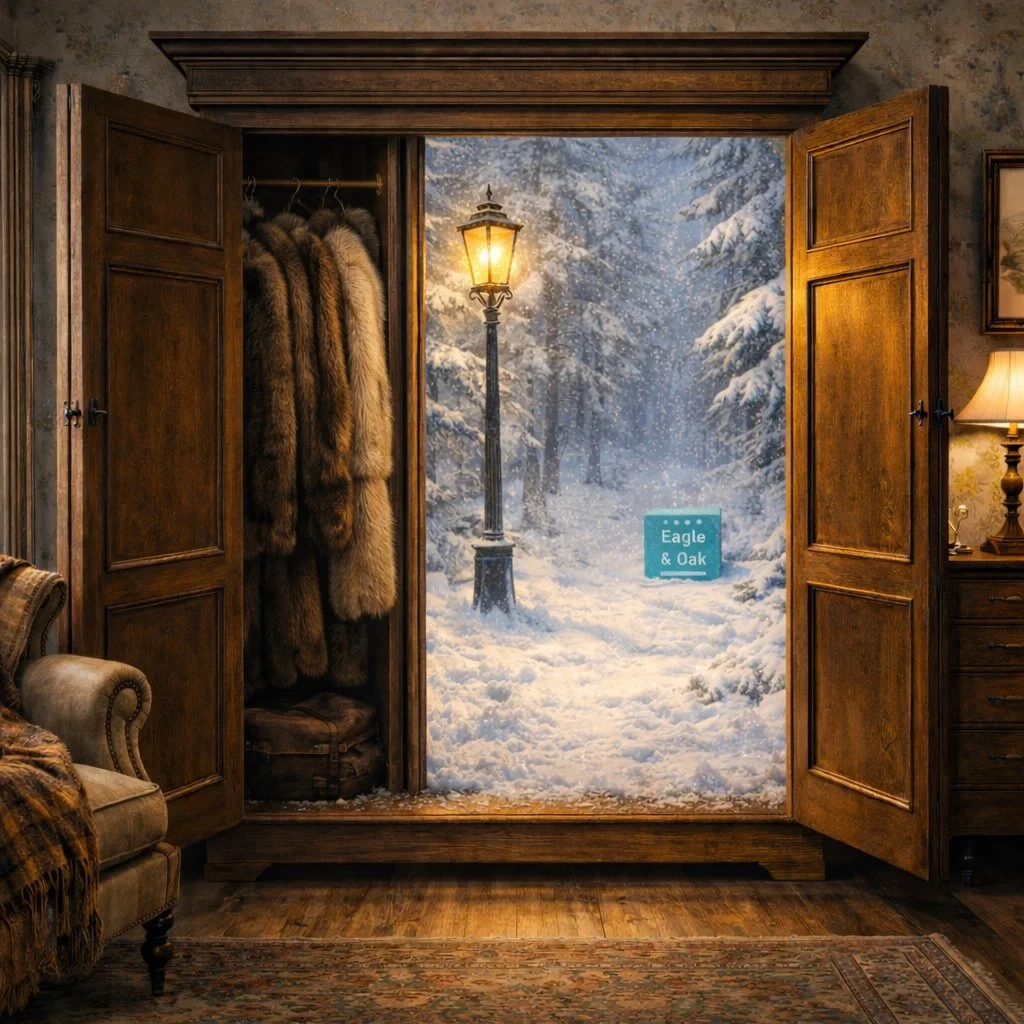
When Lucy Pevensie steps through the wardrobe in The Lion, the Witch and the Wardrobe, she doesn’t arrive at a ticket desk.
She arrives in snow. Silence. A lamppost.
And then - quite suddenly - a faun.
Mr. Tumnus doesn’t ask her if she’s a member of Narnia.
He doesn’t ask if she’s been before.
He asks, in effect:
Who are you, and how have you come here?
It’s a small moment. But it’s doing something profound.
He meets her as a person - not a category.
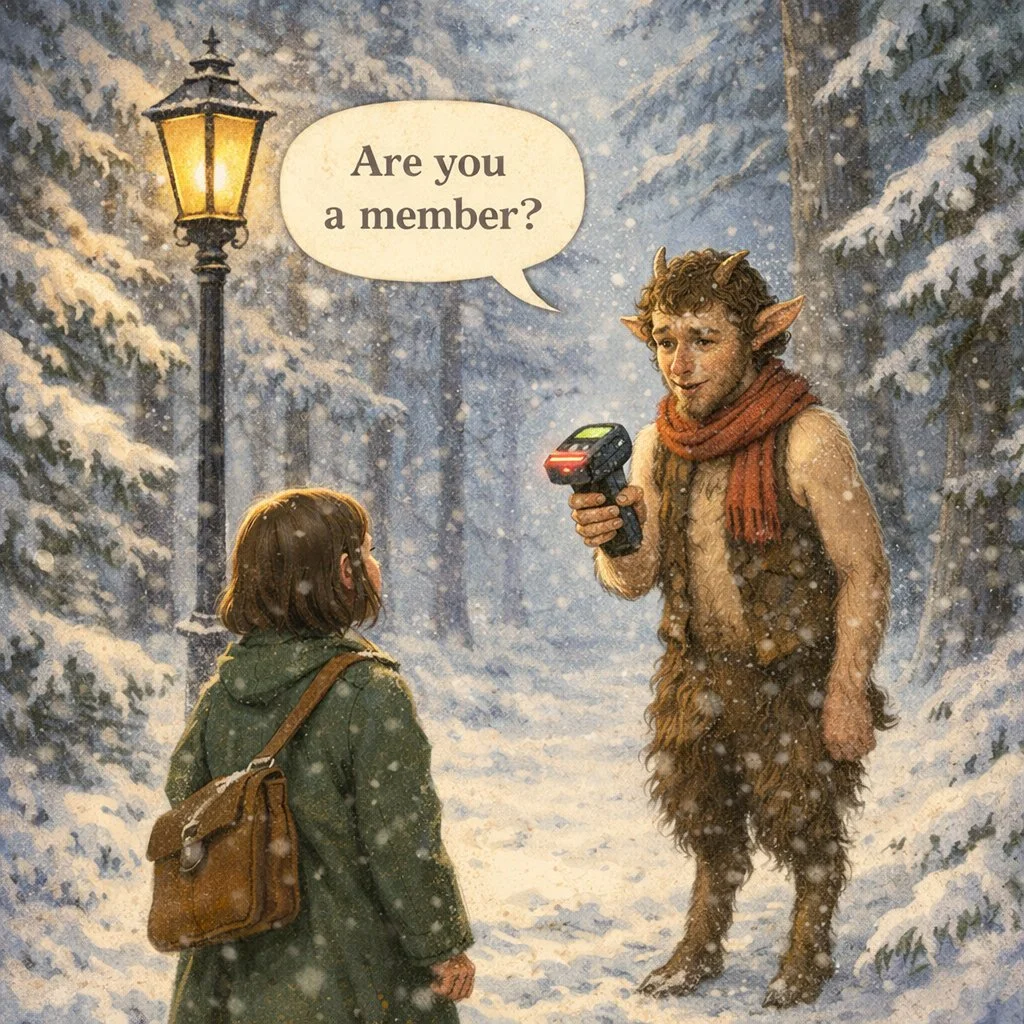
I’ve developed a bit of a bugbear about how we sometimes welcome people into places.
So often, the very first questions asked are:
“Are you members?”
“Have you been before?”
They’re not wrong.
But they’re the wrong place to begin.
They belong to the machinery of the place - the till, the CRM system, the reporting spreadsheet.
And yet they arrive first, like a customs checkpoint at the threshold of an experience.
Before a welcome has properly happened, you’ve been quietly sorted:
member / non-member
new / returning
It’s subtle, but it lands.
If I’m not a member, am I slightly lesser?
If I have been before, am I now expected to fend for myself?
And - perhaps worst of all -
has nothing changed since I was last here?
In Narnia, the questions unfold differently.
First: What are you?
Then: Are you who I think you are?
Then: How have you come here?
It’s a gentle narrowing - from wonder, to recognition, to understanding.
And only then does something else happen:
Hospitality.
A fire is lit. Tea is poured. Time is given.
The experience begins.
Back in our world, there’s a far better opening line available to us:
“What brings you here today?”
It’s such a small shift.
But it transforms the encounter.
It invites an answer that no database can predict.
“We’ve got an hour and just wanted to be outside.”
“We’ve brought my mum - she hasn’t been in years.”
“We’re killing time before dinner.”
“We’ve come for the garden, not the house.”
“We just want somewhere quiet to sit.”
Now you’re no longer processing a visitor.
You’re meeting a person, in a moment, with a purpose.
Not long ago, we arrived at a well-known historic place.
Late afternoon. Early spring. The light was soft and low.
The magnolias were out - briefly, gloriously.
We had about an hour.
At the desk:
“Are you members?”
(card scanned)
“Have you been before?”
“Yes, many times.”
We were offered a leaflet and directed - efficiently, confidently - towards a route through the house.
But we hadn’t come for the house.
We’d come for the magnolias, in that light, with that particular kind of stillness you only get at the end of the day.
No one asked.
No one noticed.
A few minutes later, at another threshold, we were stopped again - this time to be told how to carry our bags when we went inside.
We weren’t going inside.
It was all perfectly reasonable.
And entirely misaligned.
Imagine that same moment, just slightly re-scripted.
“Welcome. What brings you here today?”
“We’ve got an hour and came for the magnolias.”
“Then you’ve timed it perfectly. The upper garden will be beautiful right now - head straight through. No need to rush anywhere else today.”
No friction.
No assumption.
No wasted words.
Just alignment.
This isn’t about being friendlier (though it helps).
It’s about being more precise.
Because people don’t arrive as categories.
They arrive with intent - and that intent is often invisible unless you ask.
Not everyone wants the full route.
Not everyone wants to learn.
Not everyone wants stimulation, or structure, or even to do very much at all.
Some people come to feel something.
Or to pause.
Or to catch something fleeting - a season, a scent, a quality of light.
And here’s the quiet truth.
If you don’t ask about membership straight away, nothing terrible happens.
People will tell you.
They’ll produce a card.
They’ll mention it in passing.
And when they do, it lands differently - because they’ve already been welcomed.
The transaction still happens.
It just doesn’t define the encounter.
Back under the lamppost, there’s a moment of choice.
There are rules about what should happen next.
There’s a system waiting to be applied.
But instead, for a while, curiosity wins.
A question is asked.
A person is heard.
A different kind of experience unfolds.
We may not be welcoming people into Narnia.
But every arrival still has that same potential.
Not to sort.
Not to process.
But to ask, simply:
What brings you here today?
Changing the first question is easy.
Changing what sits behind it—how you think about visitors, what you assume, how you respond—is where the real work lies.
That’s the work we do with places: helping them understand who they’re for, what people come for, and how to meet them there.
If that feels relevant, we’d be very happy to have a conversation.