How did you get to this blog post?
Jon Breton (O’Donoghue)
Pause for a moment.
Where in the world are you reading this?
What route did these words take from my desk in Falmouth, Cornwall, UK to wherever you are now?
How many people have you communicated with remotely today?
How many messages have you sent?
How quickly did replies come back?
Minutes? Seconds? Instantly?
It’s so normal to us that we barely notice it - but the fact that these words can leave a coastal town on the edge of the Atlantic and appear, almost immediately, somewhere else on the planet is nothing short of astonishing. And what’s even more astonishing is this:
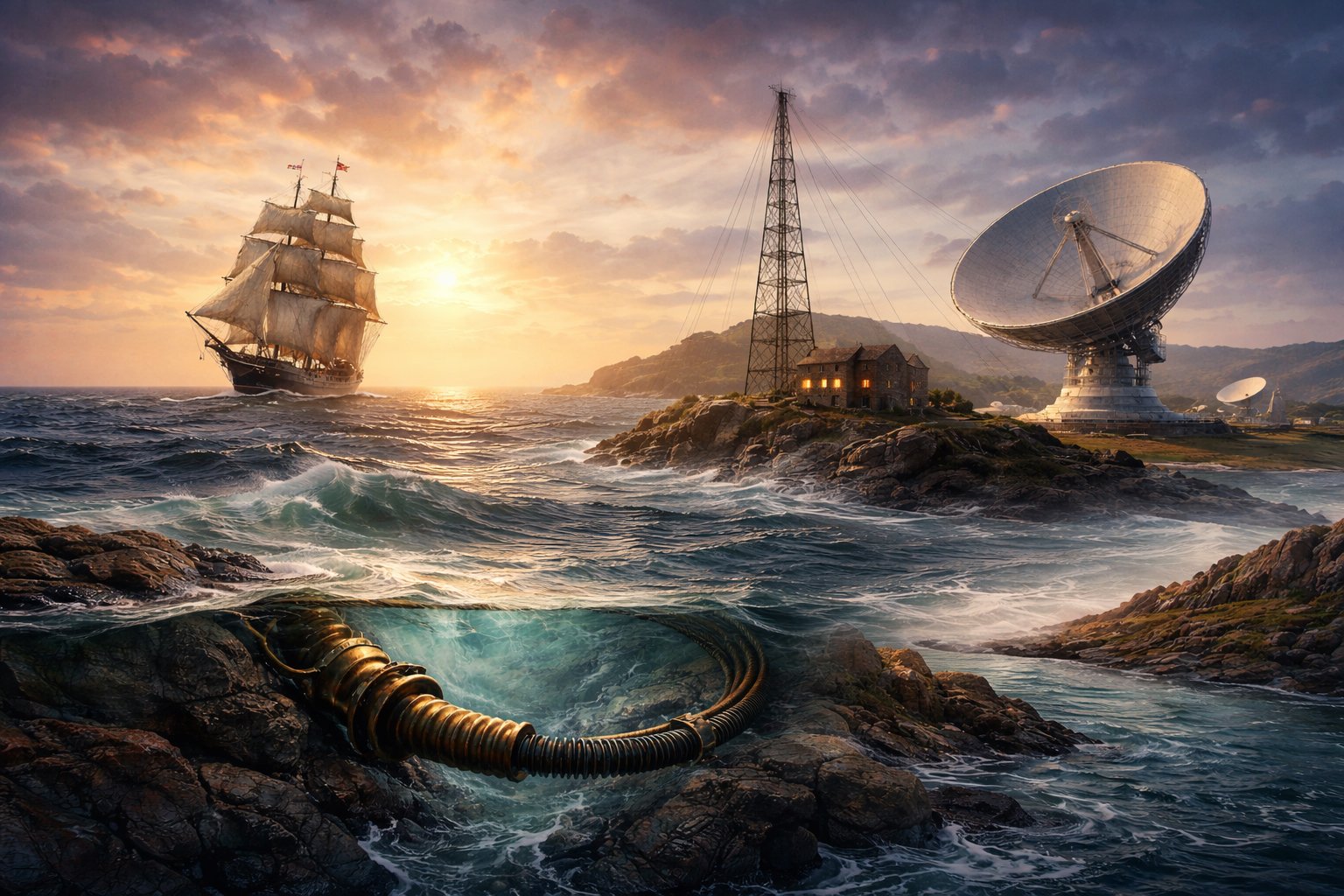
The story of how humans learned to communicate across distance - by ship, by cable, by radio and by satellite - is written across the landscape of Cornwall.
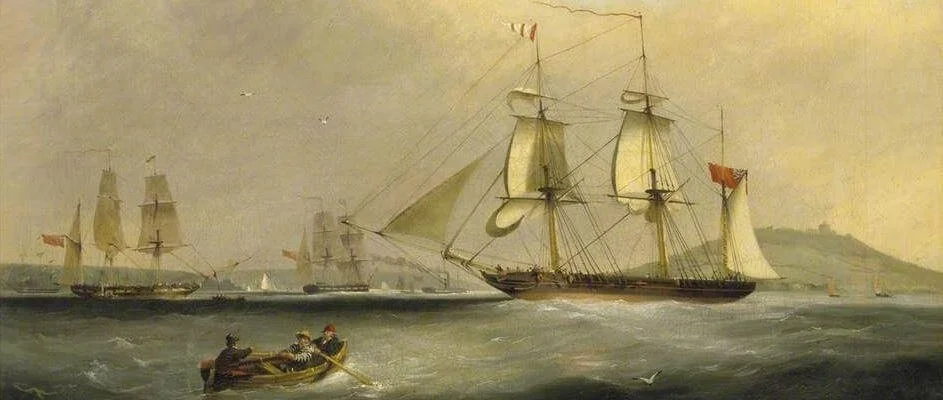
1. Ships carrying words: Falmouth and the Packet Service
Before electricity, before radio waves, before satellites, communication moved at the speed of wind and tide.
From the late 17th century, Falmouth was one of the most important communication hubs in the world. This was where the Packet Ships - fast, well-armed sailing vessels - left Britain carrying mail, intelligence, contracts, diplomatic instructions and deeply personal letters to Europe, the Americas and beyond.
Messages were written by hand. They crossed oceans. They were delayed, lost, intercepted, eagerly awaited. Weeks or months could pass before a reply returned.
Communication was physical, risky and emotional.
You can explore this story today at the National Maritime Museum Cornwall, which tells Cornwall’s wider maritime story.
2. Cables collapsing time: Porthcurno and the telegraph
Then came a revolution that changed the world almost overnight.
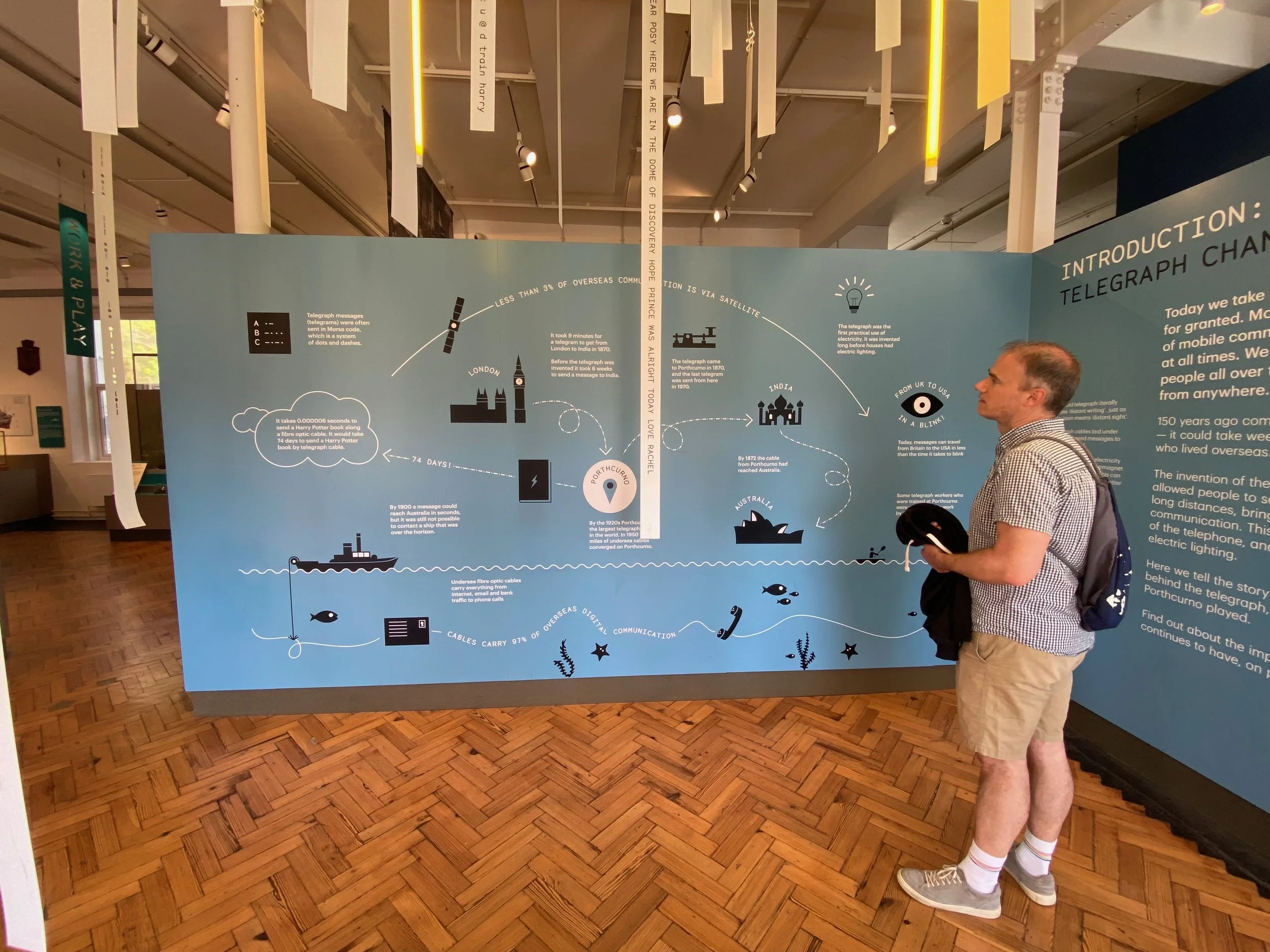
In the late 19th century, submarine telegraph cables began landing at Porthcurno, a small, steep Cornish cove. From here, messages travelled through copper wires laid across the seabed to Europe, Africa, India, Australia and the Americas.
What once took weeks now took minutes.
Empires were managed, wars coordinated, markets moved and news travelled at unprecedented speed. Messages were no longer flowing with the sea - they were encoded, abstracted and priced by the word.
This story is beautifully told at PK Porthcurno, the museum and archive that now occupies the former cable station. It is the guardian of a remarkable global communications legacy, hidden in what appears at first glance to be a quiet Cornish valley.
3. Messages without wires: the Lizard and wireless communication
The next leap was even more radical: what if messages didn’t need wires at all?
On the Lizard Peninsula, experiments in wireless communication proved that signals could travel invisibly through the air. Radio transformed maritime safety, military coordination and eventually everyday life. Ships no longer had to wait to make landfall to communicate. Distress calls could be heard. Voices and music would one day travel freely.
Communication became instant and intangible.
The story of early wireless transmission on the Lizard is now cared for by the National Trust, through the preserved wireless station buildings and interpretation across the landscape. Here, Cornwall once again sits at the threshold - this time between land, sea and sky.

4. Reaching into space: Goonhilly and satellite communication
And then, in the 1960s, communication left the Earth altogether.
At Goonhilly, enormous satellite dishes were built to receive and transmit signals to and from space. Live television broadcasts crossed oceans. Telephone calls bounced off satellites. Data began circling the planet.
This was the moment when the horizon truly stopped mattering.
Goonhilly no longer has a visitor centre, but its great white dishes are still visible across the Lizard landscape - a powerful reminder that Cornwall played a central role in the birth of the space age. Today, Goonhilly continues to operate as a commercial and scientific communications site, linking Cornwall into a global satellite network.
One story, many places: portfolio heritage across a landscape
What fascinates me most is not just that these four moments happened in Cornwall - but that together they form a single, coherent story mapped across an entire landscape.
This is what I think of as portfolio heritage: where individual sites each have their own identity and guardians, but together tell a much bigger story.
I encountered this powerfully when I worked in the Lake District, where the life of Beatrix Potter can’t be understood through a single house or museum. Her story - as author, illustrator, businesswoman, farmer and conservationist - is written across lakes, farms, villages and mountains. The landscape itself becomes the archive.
Cornwall offers something similar, but on a global scale. A story about how humanity learned to stay connected - mapped not onto one building, but onto coastlines, valleys, headlands and skies.
A question for you
Are you involved with a place that has its own heritage - but is also part of something larger?
Perhaps:
a railway that connects industrial towns
a river that powered mills, trade and migration
a coastline shaped by defence, fishing and flight
a landscape where science, art or protest unfolded across multiple sites
If so, the opportunity may not lie in telling one story more loudly - but in revealing how your place is part of a bigger, shared narrative that stretches across geography, time and human experience.
And just like this blog post, that story may already be travelling further, faster, and more beautifully than you realise.
If you’re ready to build the layers of story beyond your own place, let’s talk…
