Developing a Culture of Talks & Tours: Wray Castle
Leadership in Practice | National Trust
Turning research into confident public programming within an “empty” historic building
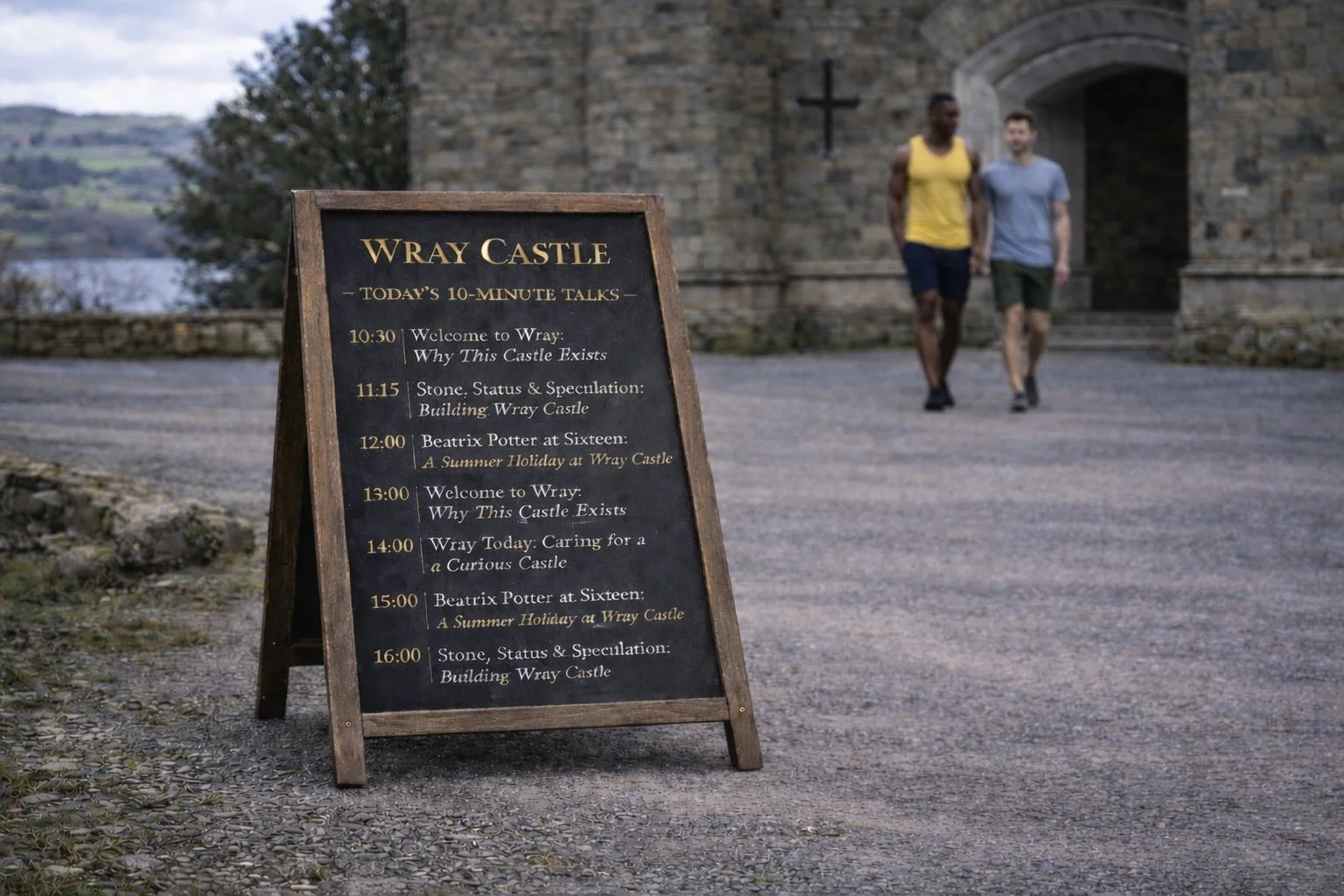
A daily menu of 10-minute talks and guided tours created clarity, variety and capacity management.
Context
Wray Castle is a dramatic Victorian building without original interiors or a traditional collection.
This structural condition required intentional storytelling. Without furnished rooms to interpret, meaning had to be actively created.
Jon Breton (O’Donoghue) assembled all research and archive material into one organised, searchable resource — identifying what was verified, what was inferred and where speculation existed.
The question became: how could this knowledge be confidently translated into daily public programming?
The challenge
The property had:
• Rich research
• Enthusiastic staff and volunteers
• High visitor numbers
• But no consistent, structured programme of talks and tours
The aim was to:
• Develop a menu of compelling short talks and longer guided tours
• Increase confidence and consistency in delivery
• Provide choice and variety throughout the day
• Manage visitor flow and capacity
• Increase dwell time
• Support secondary spend
• Embed evaluation into the pilot
This was not about adding activity — it was about building a repeatable model.
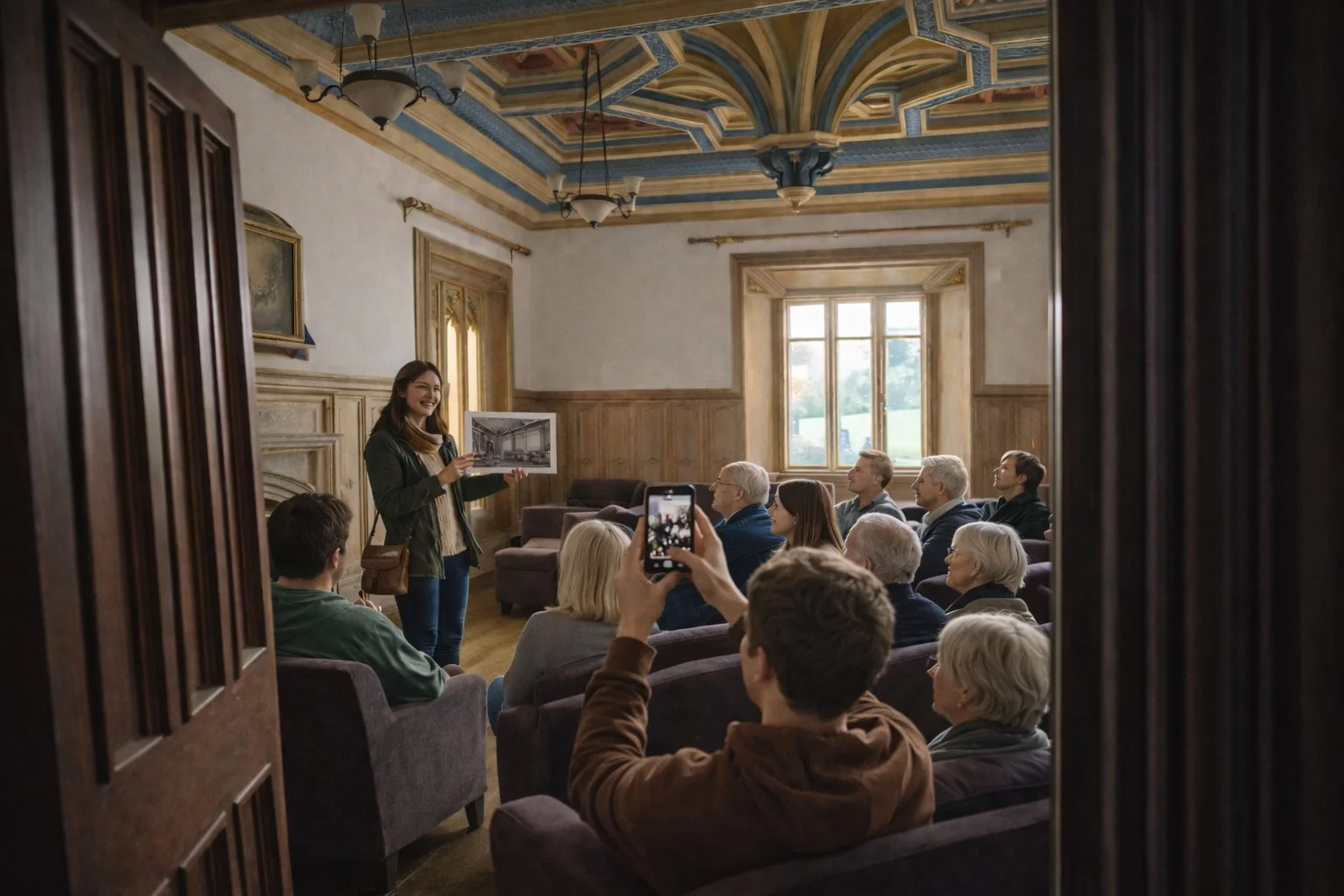
Structured training and peer feedback enabled confident delivery of research-led talks.
“A castle that isn’t a castle, but doesn’t look like a house either. An interior that looks more like a church than a home. No original contents and decades of use by various institutions. All of this meant that Wray Castle was difficult for visitors to read. With a complex story, going straight for fixed written or visual interpretation would have been expensive and risky.””
The approach
1. Research Consolidation
All historical material was assembled into a single, structured archive. Clear distinctions were made between:
• Confirmed fact
• Informed interpretation
• Speculation
This provided confidence and consistency in messaging.
2. Task & Finish Group
Jon convened a “task & finish” group from across the staff team with a clear brief:
(a) Determine the subjects for a suite of 10-minute talks and 45-minute tours
(b) Gather and process research material
(c) Use the National Trust’s own toolkit to develop presentation skills
(d) Practice and provide peer feedback
(e) Schedule a daily menu of talks and tours
(f) Evaluate the pilot and define business-as-usual delivery
The programme included both indoor and outdoor tours.
The daily schedule provided:
• Regularity
• Variety
• Choice
• Capacity management
• Clear timing points for retail and café connection
3. Embedding Evaluation
All activity was evaluated as a structured pilot.
Feedback, visitor response and operational impact were reviewed to determine what ongoing delivery should look like.
The aim was cultural shift — not a temporary programme.
What was delivered
• A consolidated and searchable research resource
• A trained cohort confident in delivering public talks
• A structured daily menu of 10-minute talks and 45-minute tours
• Improved capacity management and flow
• Increased dwell time
• Strengthened links between programming and commercial areas
• A pilot evaluation framework
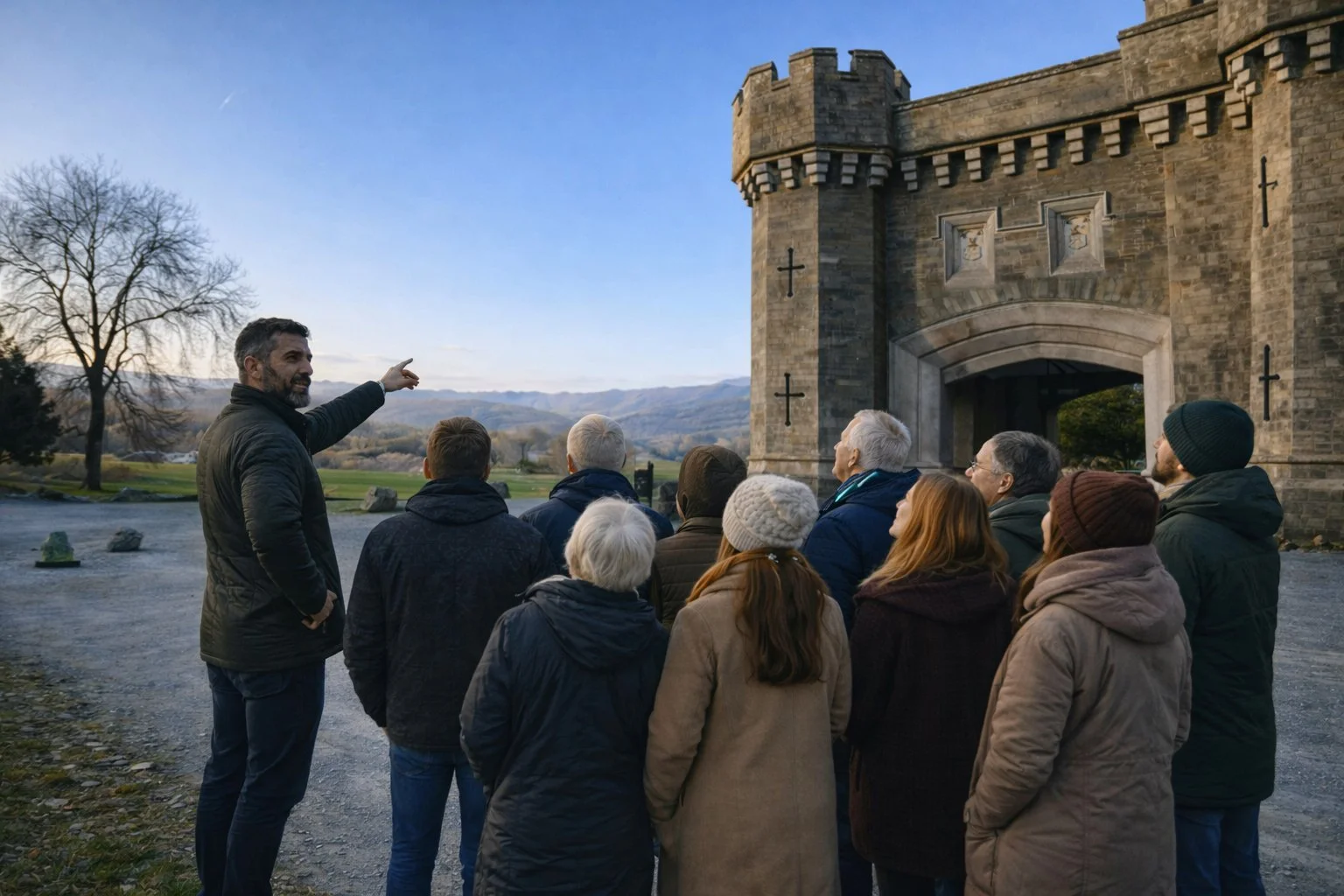
Outdoor tours extended storytelling beyond the building, linking architecture, landscape and context.
Outcomes
The programme shifted Wray Castle from reactive interpretation to confident, proactive storytelling.
It:
• Increased visitor satisfaction
• Improved staff and volunteer confidence
• Extended dwell time
• Encouraged secondary spend
• Created repeatability and structure
“Fortunately arrived here in time for a tour by David the guide who gave an excellent account of everything interesting. Didn’t get bored once as he hit the pitch perfectly. He made a wet grim day brighter from our new found knowledge.”
Why this matters
Historic buildings without collections often struggle with narrative authority.
This project shows that:
• Research clarity
• Skills development
• Structured scheduling
• Evaluation discipline
can transform interpretation into a strategic asset.
It reflects a leadership approach grounded in:
• Confidence through evidence
• Skills development
• Structured programming
• Commercial awareness
These principles continue to inform Eagle & Oak’s work with organisations seeking to strengthen daily programming and visitor engagement.
If your place needs to move from informal storytelling to structured interpretive confidence, Eagle & Oak would be pleased to talk.