Community Co-Curated Exhibition: The Women of Wray Castle – Convention & Control
Leadership in Practice | National Trust
Embedding community voice and contemporary perspective within a historic house exhibition
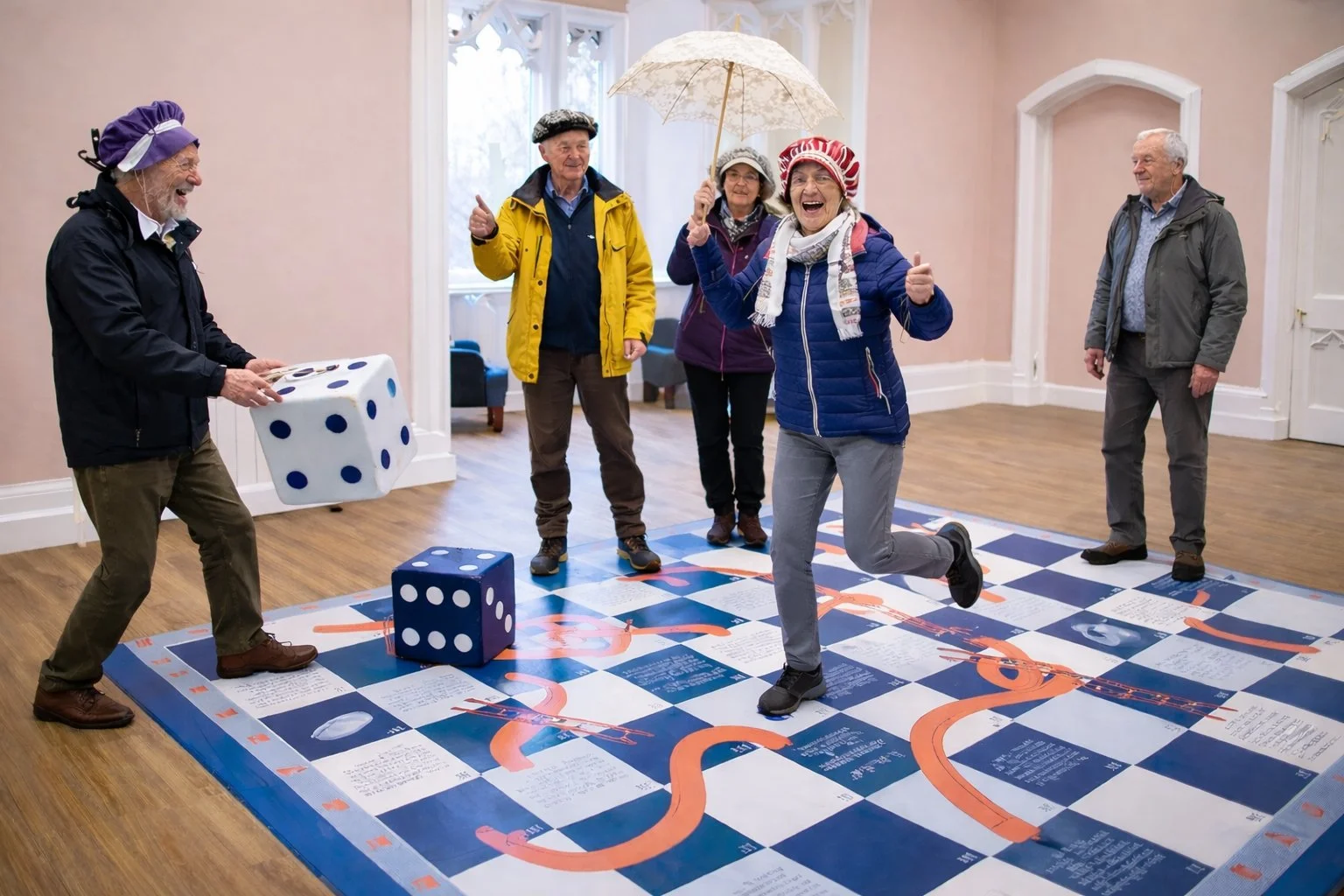
An artist-developed “snakes and ladders” installation exploring the constraints and opportunities facing women in 19th-century Britain.
Context
Wray Castle is a dramatic Victorian building in the Lake District - but without historic interiors or a traditional collection.
Jon Breton (O’Donoghue) sought to move beyond a daily programme of talks and tours to create deeper storytelling content and involve more voices in shaping interpretation.
To coincide with the 2018 centenary of some women first gaining the right to vote, he selected “Convention & Control” as the theme for the property’s first major exhibition.
The project combined historical research, contemporary interpretation and community co-curation.
The challenge
The castle presented three structural challenges:
• No original contents
• A need to broaden narrative voice
• A desire to engage audiences beyond conventional heritage interpretation
The exhibition needed to:
• Be rigorous in research
• Give contemporary women space to respond
• Engage new audiences
• Empower community participation
• Demonstrate that historic houses can host progressive conversations
All within the framework of a National Trust property.
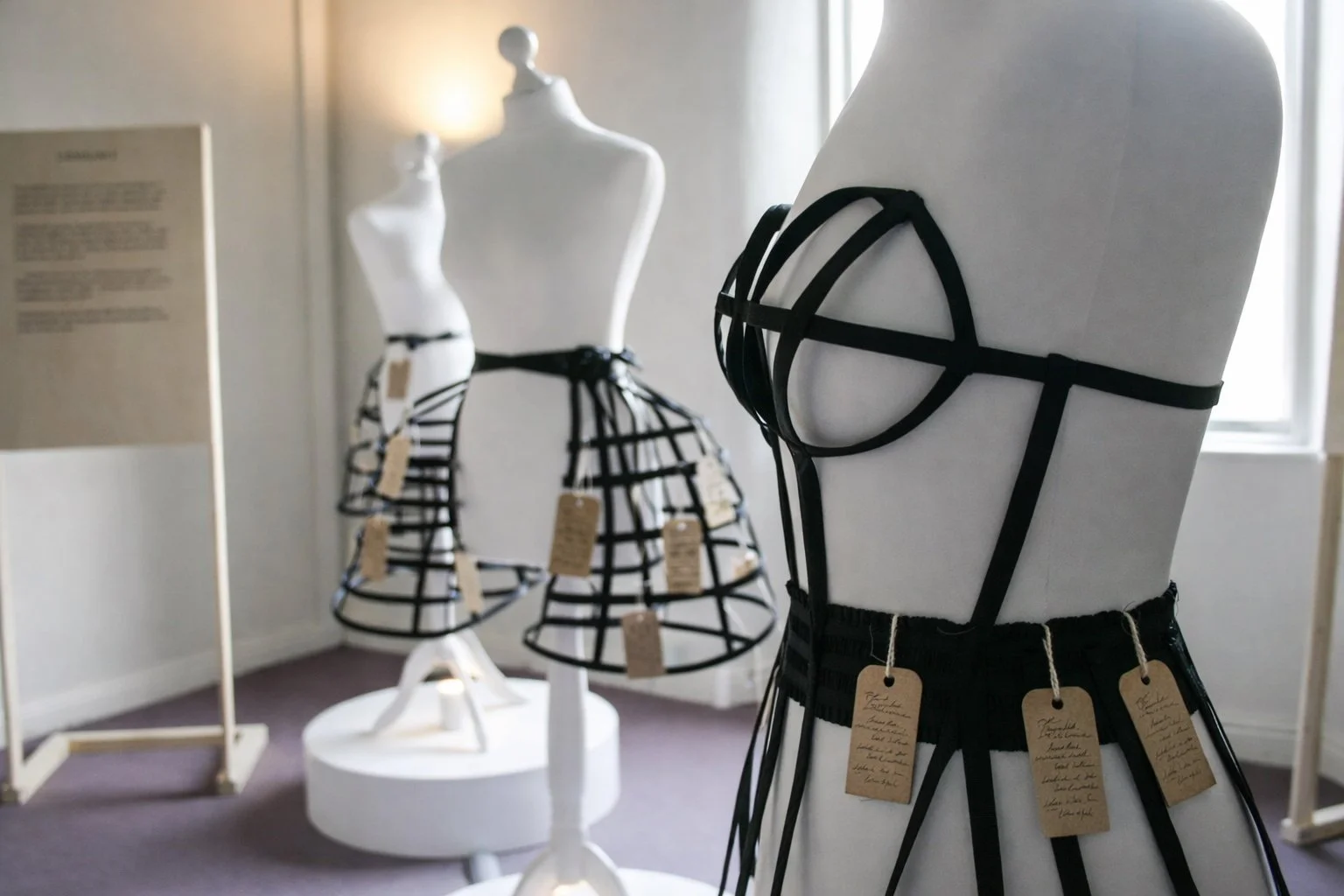
Contemporary artistic responses were juxtaposed with historical research to explore convention, identity and control.
“Wray Castle witnessed Beatrix Potter not yet as an author, but as an observant and questioning young woman. Her teenage summer here coincided with a period of deep intellectual awakening that would influence the direction of her adult life. This chapter of her story was overdue for exploring - and Wray Castle is uniquely placed to do this.”
The approach
Jon commissioned a research intern to explore the life of Margaret Dawson, who inherited the estate and whose legal status as a “femme-sole” presented a compelling story of women’s property and legal rights.
The exhibition also explored Beatrix Potter’s early connection to Wray Castle — including her scientific work on fungi and the barriers she faced in recognition within the scientific community.
Jon appointed an exhibition coordinator, alongside four artists and two artist-facilitators.
The facilitators worked directly with female community groups to shape the content visitors would experience. A discussion group co-curated the Margaret Dawson section, and local Girl Guides co-curated the Beatrix Potter section.
Contemporary artistic responses were juxtaposed with historical research.
Installations included:
• A large-scale “snakes and ladders” game exploring the highs and lows of life as a woman in 19th-century Britain
• A soundscape of reflections from contemporary women paired with five urn installations
• Interactive installations exploring science, identity and constraint
• A reflective space where visitors could leave their own responses
The exhibition was intentionally interactive, emotional, scientific and visually striking.
What was delivered
• A fully researched and curated thematic exhibition
• Community co-curation embedded within exhibition development
• Artist-led installations integrated into a historic setting
• Engagement with young women through Girl Guides
• Contemporary feminist dialogue within a National Trust property
• A participatory visitor reflection component
The exhibition marked a step-change in how Wray Castle interpreted its stories.
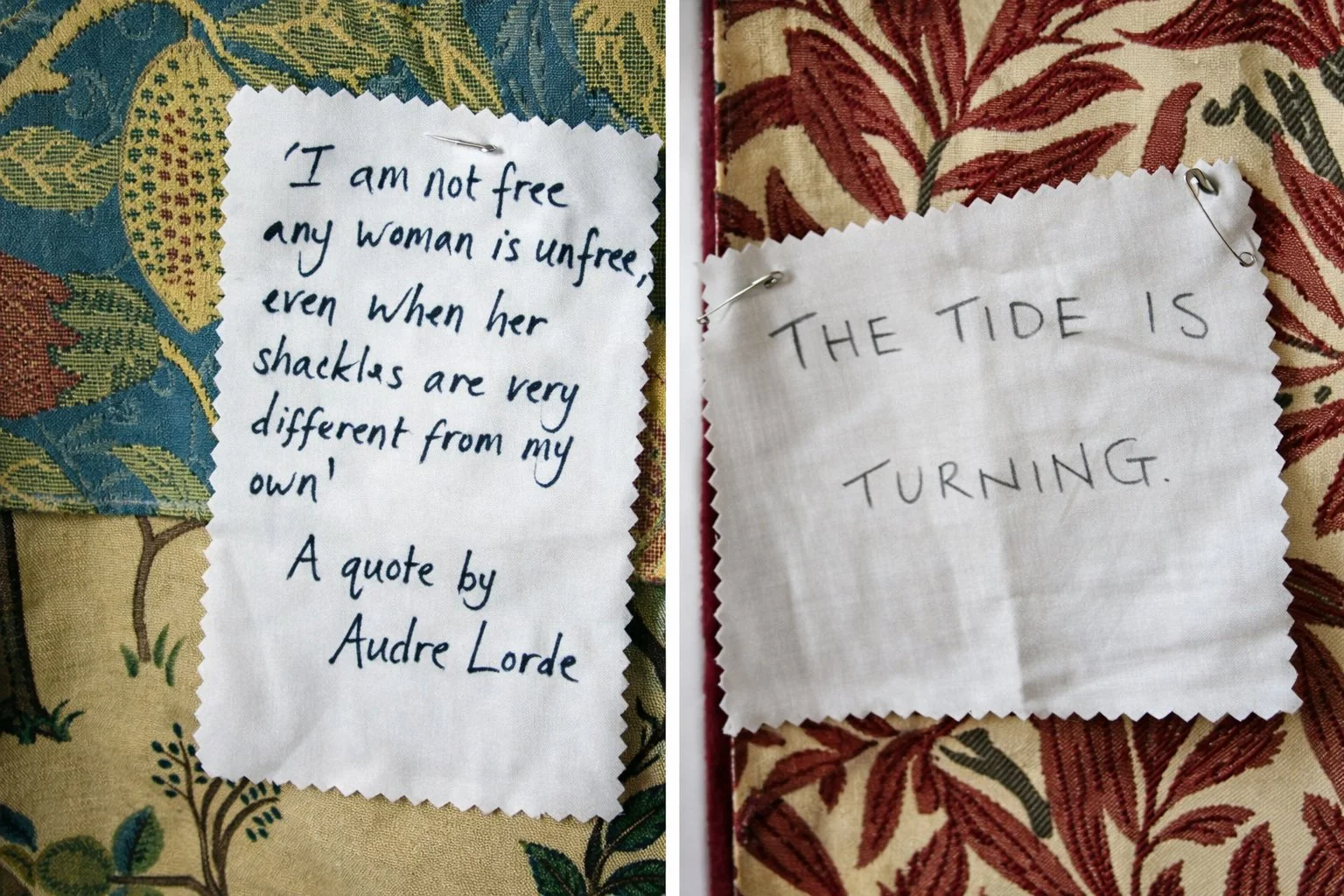
Visitors were invited to leave their own reflections - extending the exhibition’s dialogue beyond the curated narrative.
Outcomes
The exhibition proved highly engaging and progressive for a wide variety of visitors.
It:
• Empowered community voices
• Expanded the interpretive model beyond traditional house storytelling
• Demonstrated the viability of artist-led interventions
• Positioned Wray Castle as a place for contemporary relevance
• Increased visitor engagement through participation
It also demonstrated that buildings without collections can become powerful platforms for ideas.
“...the current exhibition -the women of Wray Castle convention and control - provides a really original presentation of the life and times of the heiress whose fortune built and maintained this model Lakeland estate. It’s the best exhibition we’ve seen in a NT property, fun and informative for adults and teens, particularly if you’re interested in women’s rights.”
Why this matters
Historic houses often struggle with voice, relevance and representation.
This project shows that research, community co-creation and contemporary practice can work together to produce exhibitions that are rigorous, inclusive and confident.
It illustrates a leadership approach grounded in:
• Research integrity
• Creative collaboration
• Community empowerment
• Structured project delivery
These principles continue to inform Eagle & Oak’s work with cultural and heritage organisations seeking to broaden voice and deepen engagement.
If you are considering how to open new narratives within historic settings, Eagle & Oak would be pleased to talk.