Transformation with a Digital Strategy: River & Rowing Museum
Leadership in Practice | River & Rowing Museum
Restructuring content, marketing and supporter systems to drive efficiency and growth
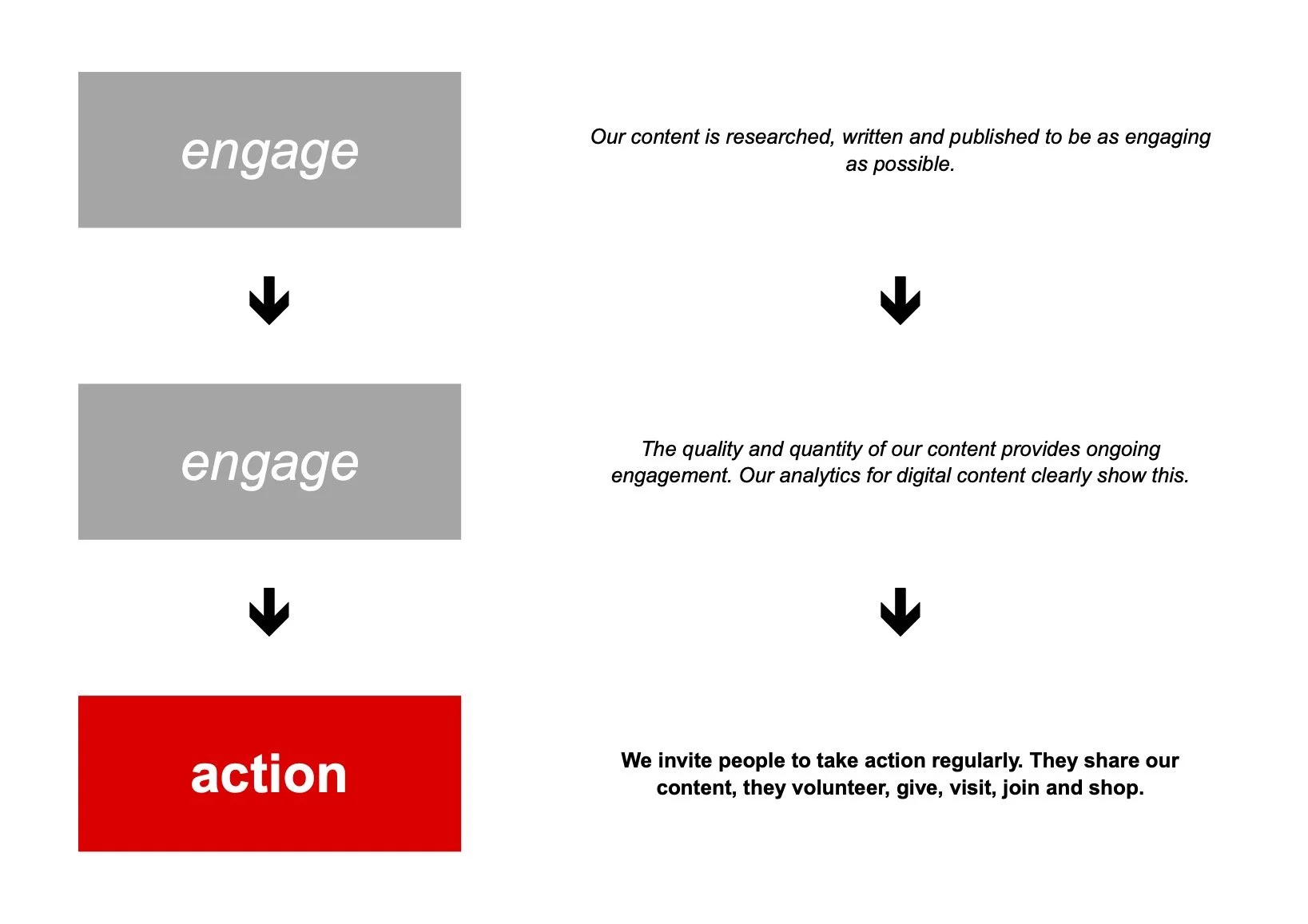
A structured content framework aligning research, engagement and clear calls to action.
Context
Between March 2021 and January 2022, Jon Breton (O’Donoghue) led the development of a digital strategy at the River & Rowing Museum.
The museum had an abundance of stories, volunteers and goodwill - but also an outdated website, a high bounce rate, low conversion, and multiple teams publishing content independently across platforms.
Five different contributors were writing and publishing content from scratch. Supporter data was held across more than fifteen systems. Volunteers, Friends and donors were often treated as separate individuals rather than a single supporter.
The organisation had reach - but lacked structure.
The challenge
The museum faced several structural inefficiencies:
• 33 different supporter types
• 15+ methods of storing supporter data
• 9 different supporter “owners”
• High administrative burden
• Low digital conversion
At the same time, the museum needed to:
• Strengthen supporter development
• Improve marketing efficiency
• Increase digital engagement
• Modernise infrastructure
• Work within post-Covid constraints
The digital strategy needed to be transformative, not cosmetic.
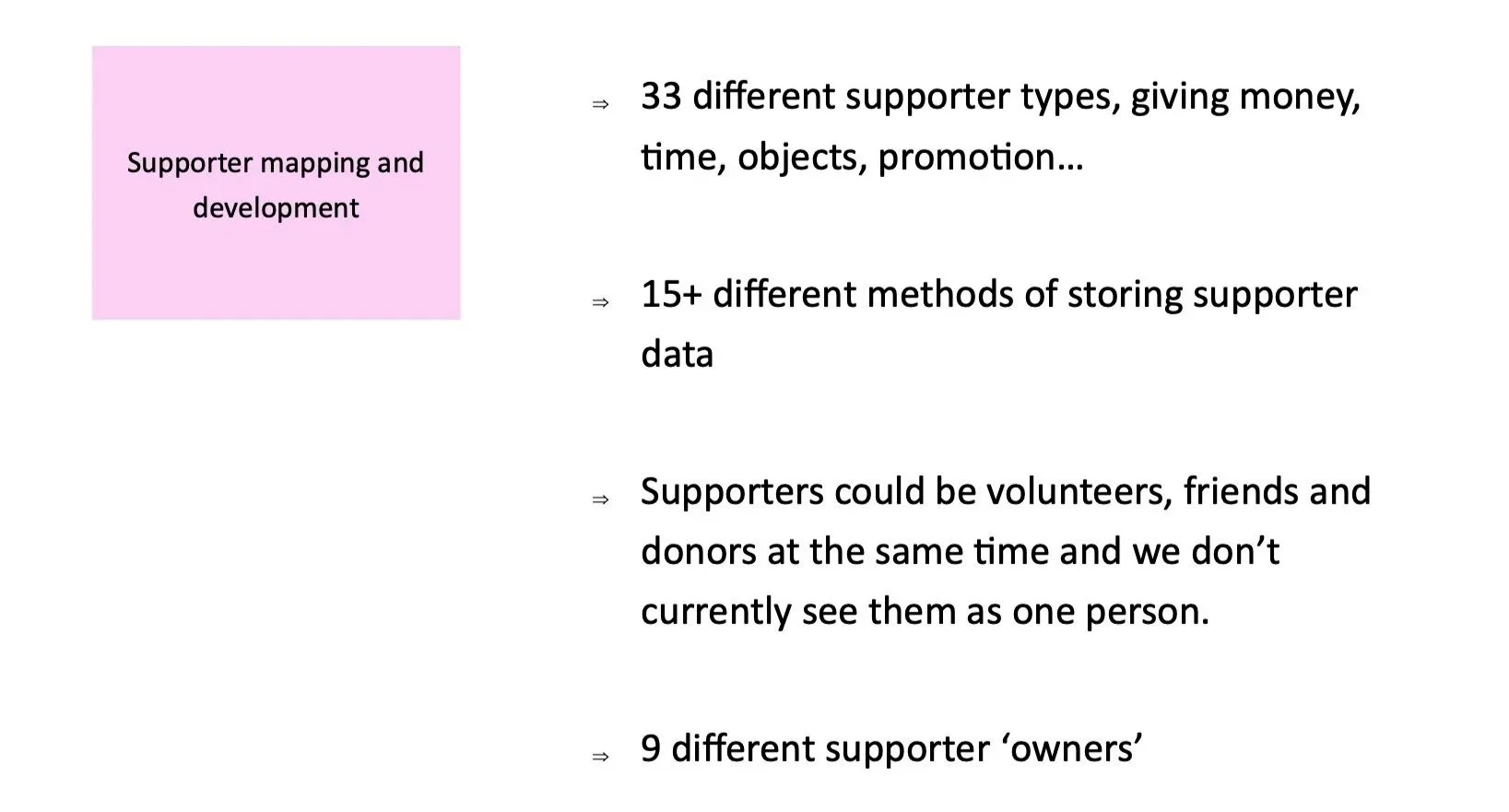
Mapping supporter fragmentation revealed structural inefficiencies and the need for a single-supporter view.
“We needed this sort of big thinking to transform the way we thing and work with our supporters. As soon as Jon helped us identify the problem, it was actually really good fun working with others in this area to smooth everything out. After this work, we spend way less time on administration and more time talking with people. That’s real supporter development!”
The approach
Jon identified that the root issue was not technology alone — it was structure.
The work was organised into five strands:
1. Content
New volunteer roles were designed to research, write and curate content. Some roles were virtual, allowing participation from beyond the museum’s geographic footprint.
A clear content management strategy was created so material could be reused across website, social media, newsletters, digital screens and supporter communications.
The content approach followed a simple logic:
Engage → Engage → Action
Content would first celebrate sense of place and widen perspective, then build sustained engagement, and finally invite clear calls to action - volunteering, visiting, giving or joining.
2. Website and CRM
Detailed briefs were written and a tendering process run to commission a new website and integrated CRM system.
The objective was a “single supporter view” - recognising that one individual might be a volunteer, Friend and donor simultaneously.
The CRM strand addressed inefficiency, data protection risk and supporter fragmentation.
3. Marketing Restructure
The marketing team was restructured to reflect the strategic importance of digital communications.
Two new Digital Marketing Officer roles were created to ensure capacity and expertise.
4. Supporter Development
The digital strategy was aligned directly with supporter development goals.
Reduced administrative burden would create more time for meaningful conversation and relationship-building.
A clearer supporter journey was defined - from casual visitor to repeat visitor, Friend, volunteer or donor.
5. Iterative Growth
The strategy was designed to be iterative.
Content performance would be analysed regularly. Channels refined. Future commercial publishing options explored.
Digital transformation was positioned as an ongoing discipline rather than a one-off project.
What was delivered
• A museum-wide digital strategy
• Structured content management approach
• Volunteer content roles (including virtual participation)
• Website and CRM commissioning process
• Supporter mapping and consolidation
• Marketing team restructure
• Clear supporter journey framework
• Iterative growth roadmap
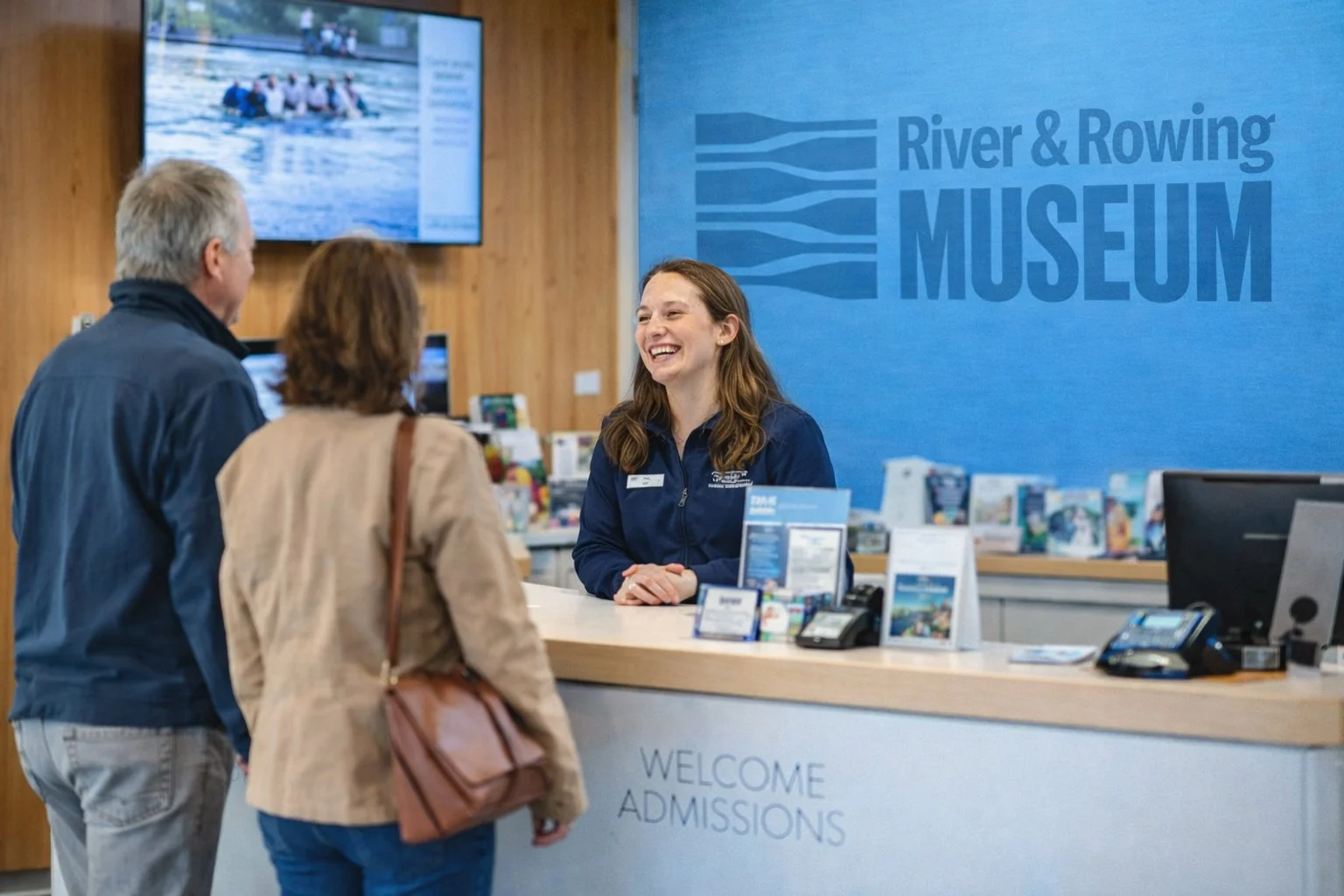
A redesigned admissions and supporter journey placed welcome and data integration at the heart of the visitor experience.
Outcomes
The strategy created the conditions for:
• Reduced duplication and inefficiency
• Improved data security and governance
• Greater clarity of supporter relationships
• Increased digital reach and engagement
• Stronger alignment between content and revenue
Most importantly, it reframed digital from a publishing function to a strategic growth driver.
The work demonstrated that digital transformation in heritage organisations must begin with structure, people and purpose — not simply platforms.
“The museum’s newsletters help us understand the stories behind the town [Henley-on-Thames] that we’ve moved to. They also show the different ways people support the museum’s work, which definitely makes us more likely to help out in the future. ”
Why this matters
Many museums and heritage organisations accumulate stories, supporters and platforms faster than systems.
This case study demonstrates how structured thinking, governance clarity and cultural change can unlock efficiency and growth.
It reflects a leadership approach grounded in:
• Systems thinking
• Audience development
• Organisational design
• Practical implementation
These principles continue to inform Eagle & Oak’s consultancy work with organisations navigating digital and structural transformation.
If your organisation is ready to move from fragmented effort to structured impact, Eagle & Oak would be pleased to talk.