Historic Garden - 10-year Business Plan
Strategic business planning for a nationally significant historic garden
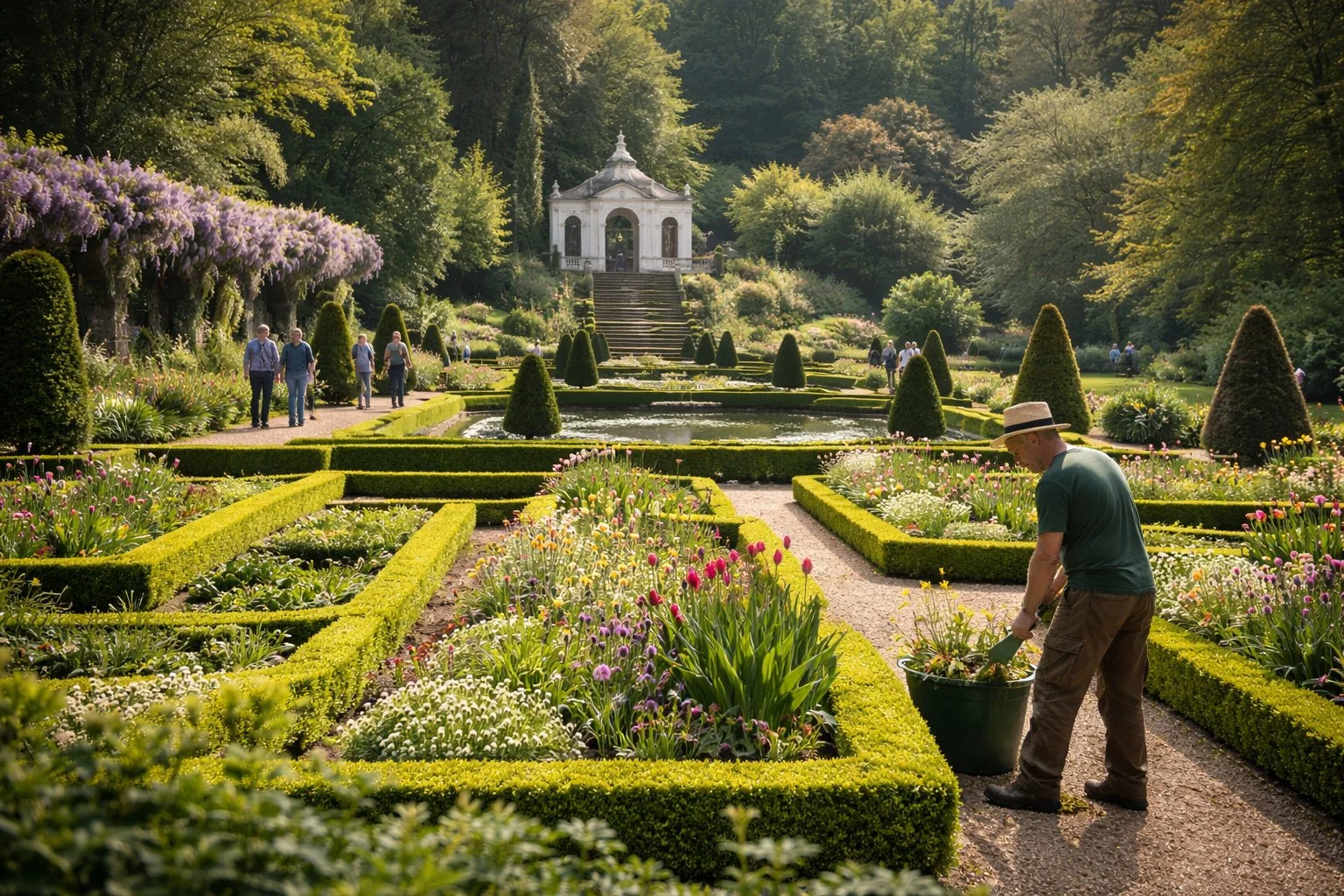
Day-to-day care in a working historic garden, balancing public access, operational reality and long-term resilience through thoughtful stewardship.
Context
A nationally significant historic garden welcomes around tens of thousands of visitors each year and operates within tight physical, environmental and seasonal constraints.
Following a period of disruption, including the loss of long-standing visitor facilities, the organisation secured major development funding to strengthen long-term resilience and provide a clear basis for future investment. Eagle & Oak was commissioned to develop a new 10-year business plan to support this next phase.
The challenge
This was not a growth-led brief.
The Trust needed a plan that:
reflected the garden’s exceptional significance and fragility,
addressed operational and financial pressures honestly,
responded to changing visitor behaviour and expectations,
and provided a clear framework for decision-making over the next decade.
As the work was nearing completion, there was a change in senior leadership. The previous Director left to take up a role with a nearby heritage destination as the plan entered its final stages. The Board asked Eagle & Oak to continue the work with their successor - supporting them to complete the plan and take ownership of it as part of their induction into the role.
The business plan therefore needed not only to be robust, but to function as a shared reference point: one that could bridge leadership transition and provide continuity, confidence and clarity.
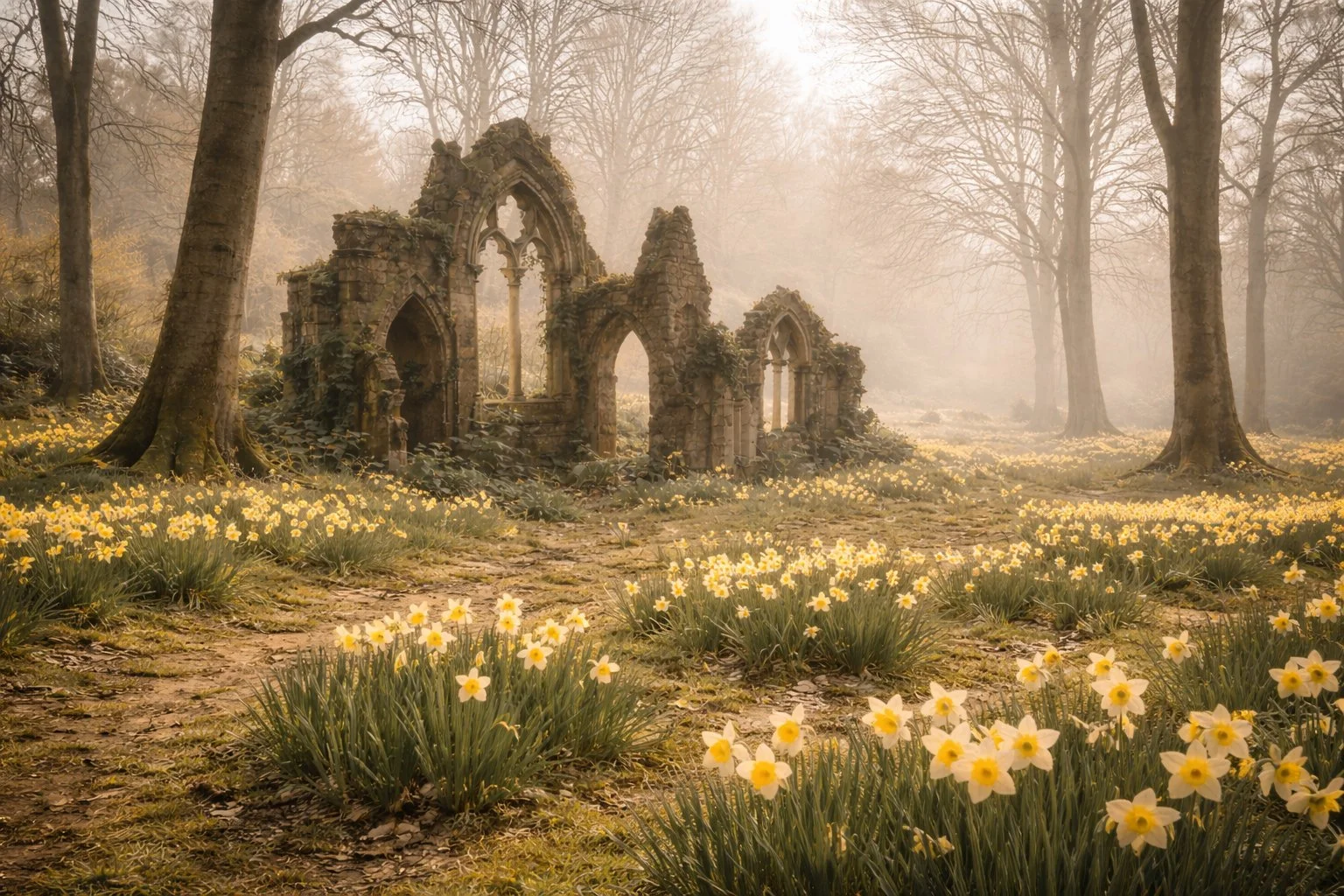
A nationally significant historic garden shaped by time, fragility and continuity — where long-term stewardship matters more than growth.
Our approach
Eagle & Oak worked closely with both the outgoing and incoming Directors, as well as trustees and staff, to ensure continuity of thinking and shared understanding.
The plan was grounded in how the garden actually functions - physically, operationally and experientially - and structured around five clear objectives that translated mission into action. These objectives provided a consistent lens through which all proposals were tested: from audience development and visitor experience, through operations and staffing, to finance and investment.
During the leadership transition, particular emphasis was placed on:
making assumptions explicit,
clearly linking recommendations to evidence,
and ensuring the plan could be confidently owned and used by the new Director from the outset.
Rather than separating “experience”, “operations” and “finance”, the work deliberately held them together, so that the plan could act as a practical management tool rather than a static strategy document.
What we delivered
The final business plan was structured as a coherent set of interrelated parts, rather than a series of standalone chapters. It included:
A clear articulation of purpose, significance and sense of place, establishing what must be protected and what can evolve
A detailed analysis of audiences, attendance patterns and seasonality, including market context and comparator gardens
A practical assessment of the visitor experience, identifying where the garden performs well and where targeted change could have real impact
A review of commercial activity, pricing and secondary spend, grounded in observed behaviour
An examination of operations, staffing and organisational capacity, aligned to use across the year
A fully integrated financial model, linking income, costs and risk over a 10-year period, with sensitivities rather than single-point forecasts
A clear three-year delivery plan, setting out priorities, sequencing and dependencies
An investment and funding framework, designed to support future fundraising and masterplanning without overcommitting the organisation
Each section was explicitly tied back to the five objectives, ensuring clarity, coherence and ease of use.
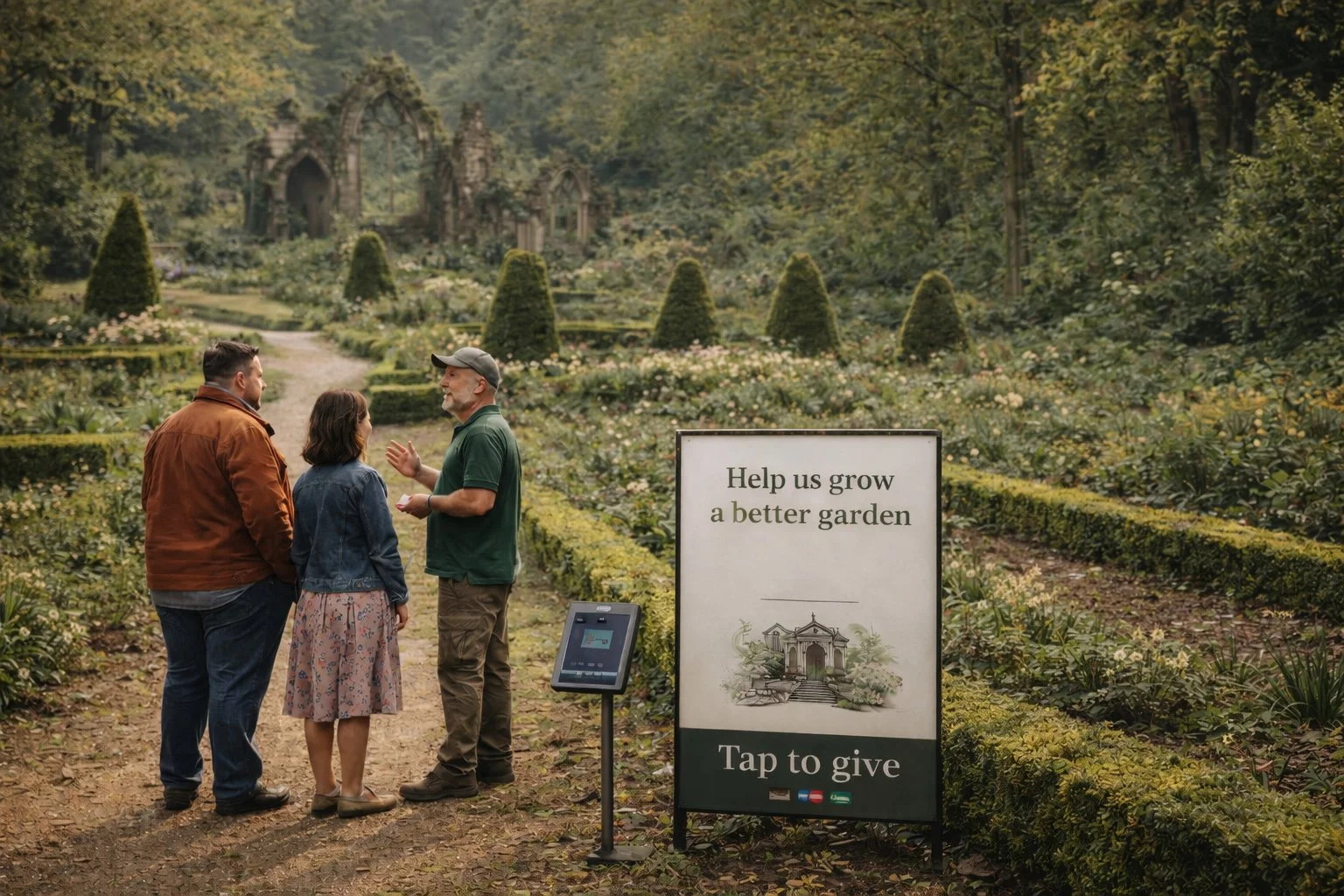
A member of staff speaking with visitors about a fundraising appeal, connecting day-to-day care with long-term stewardship of a nationally significant historic garden.
Outcomes
The completed plan provided the Trust with a stable, shared framework at a moment of change.
It supported a smooth leadership transition, enabled the new Director to take ownership of the plan as part of their induction, and gave trustees confidence that the organisation had a clear, evidence-based route forward.
Most importantly, it aligned mission, experience, operations and finance without proposing change for its own sake or compromising the qualities that make the garden exceptional.
Why this matters
For historic gardens, resilience is rarely about scale. It is about coherence, continuity and confidence.
This project demonstrates how a carefully structured, experience-led business plan can support not only long-term stewardship, but also organisational transition - helping a highly significant place move forward while remaining rooted in what it is and why it matters.
For organisations needing a business plan that genuinely understands place - and supports confident, long-term decision-making - this is how we work. Let’s talk.