Developing Events through Collaboration and Innovation
Leadership in Practice | National Trust
Embedding evaluation, innovation and audience-led thinking into a national events programme
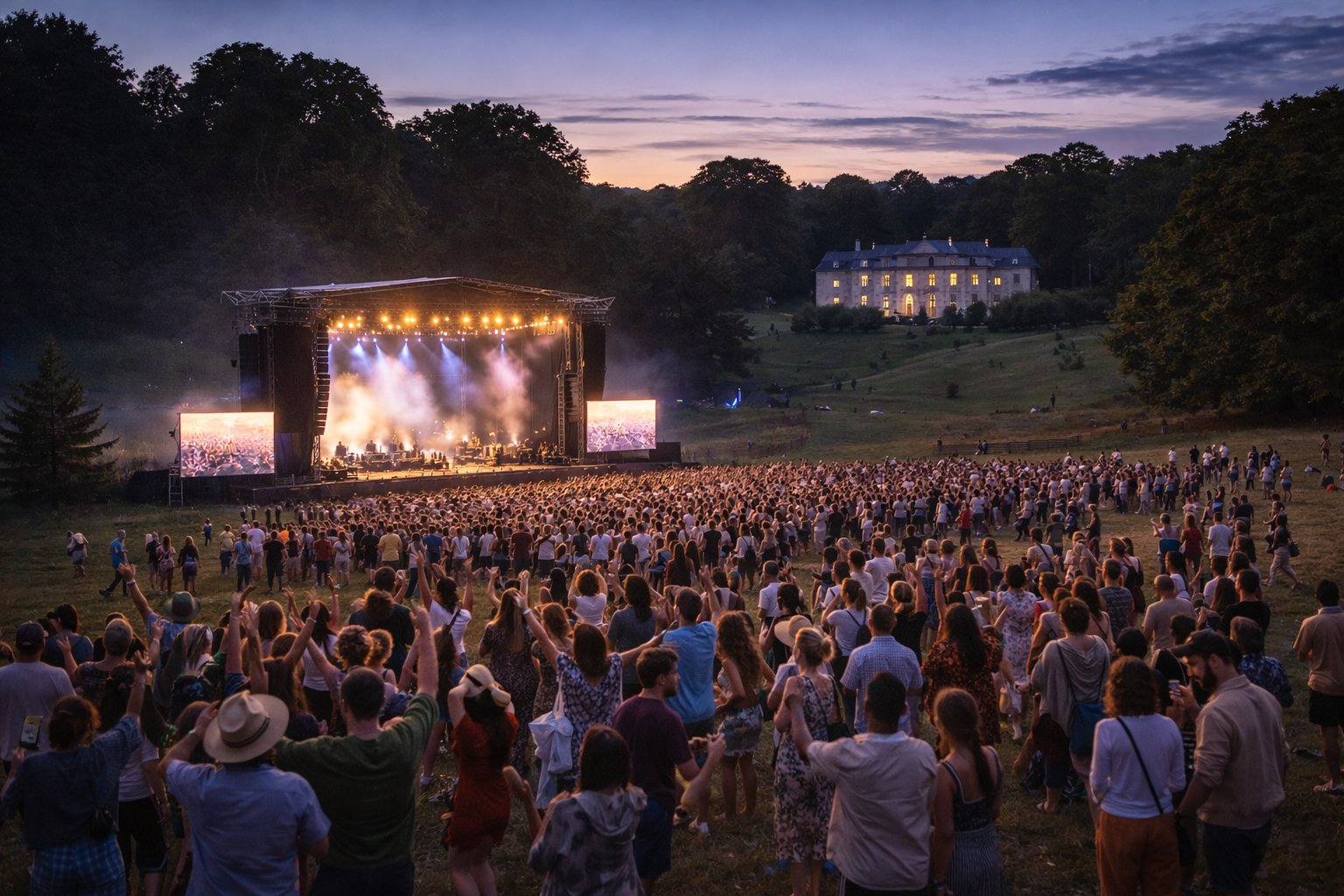
Large-scale performances generated essential income - but required clearer frameworks to balance financial return with conservation responsibility.
Context
In 2009, as part of delivering a new national strategy, the National Trust established cross-organisational “Innovation Groups” composed of multi-disciplinary staff and volunteers.
Jon Breton (O’Donoghue) joined the Developing Events Innovation Group, tasked with addressing inconsistencies in how events were conceived, evaluated and delivered across the organisation.
At the time, events ranged widely:
• Large-scale concerts generating significant income but carrying environmental and conservation risks
• Deep engagement events that were meaningful but often financially fragile
• Historic house programmes that lacked clarity of purpose or structured evaluation
There was no shared framework for measuring impact, balancing financial return with conservation responsibility, or ensuring events reflected each place’s distinct character.
The challenge
Events had become widespread but uneven.
The organisation needed to:
• Embed evaluation across all events
• Balance financial goals with social and environmental responsibility
• Strengthen audience engagement
• Encourage innovation rooted in each place’s uniqueness
• Shift organisational culture from instinct-led programming to evidence-led learning
Without suppressing creativity.
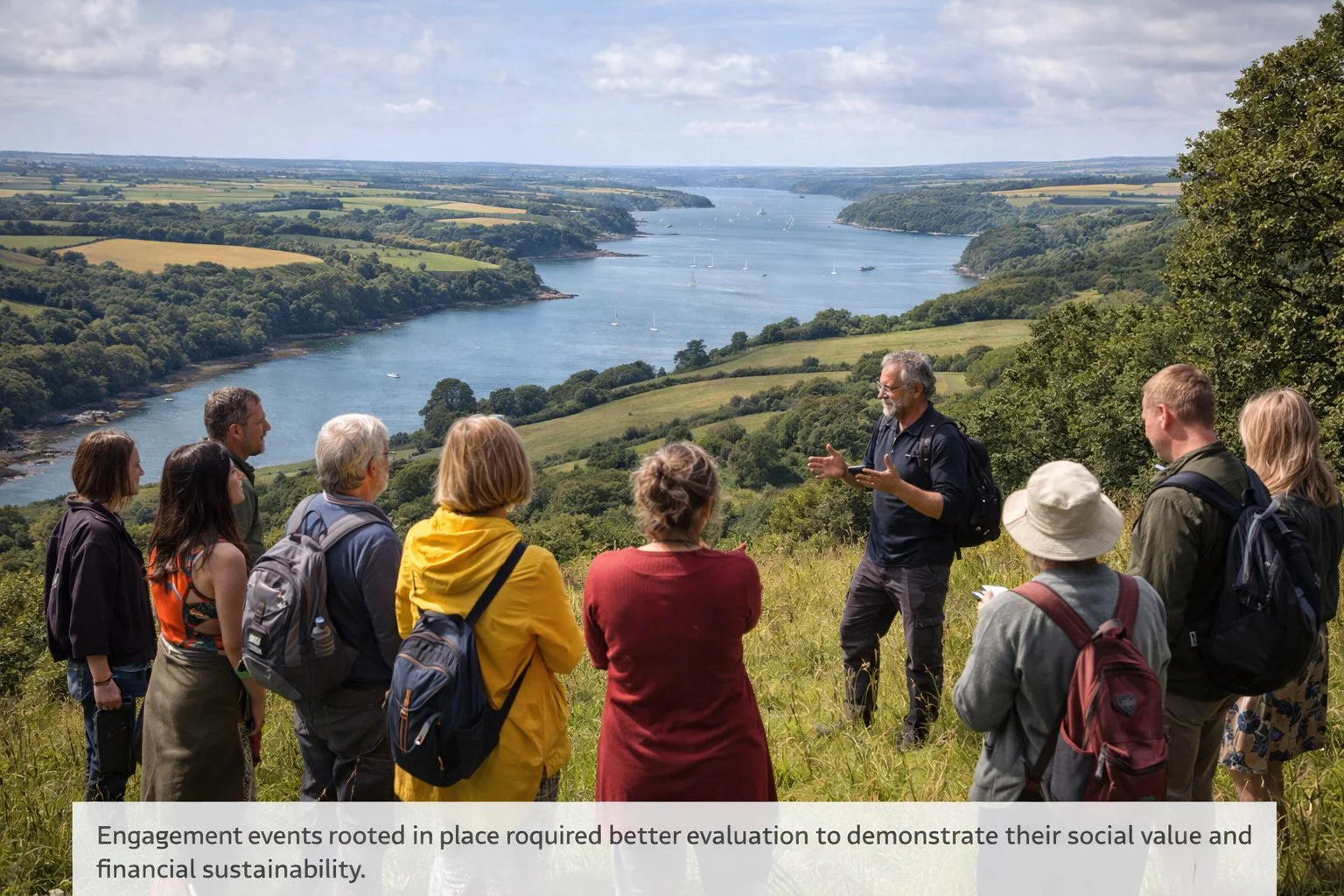
Engagement events rooted in place required better evaluation to demonstrate their social value and financial sustainability.
“Jon helped us move from enthusiasm-driven events to evidence-led programming. The evaluation framework gave us confidence to innovate while understanding risk — financially, environmentally and socially. It fundamentally changed how we thought about events across the organisation.”
The approach
Jon played a central role in shaping a structured evaluation framework for events across the Trust.
Drawing on the group’s collective expertise, he helped develop a triple-bottom-line evaluation toolkit, enabling teams to measure:
• Financial performance
• Social and engagement impact
• Environmental consequences
This framework allowed places hosting large-scale concerts to quantify both income and conservation risk - and identify mitigation strategies where needed.
It also strengthened the case for deep engagement programmes by demonstrating their broader value and identifying opportunities to increase reach and revenue.
Beyond framework design, Jon mentored colleagues in applying the toolkit confidently, encouraging reflective practice and a culture of constructive risk-taking.
He also conceived, tested and evaluated new event formats. One example was adapting the traditional historic house visitor model to include a night-time sensory experience at Trerice - integrating atmosphere, performance and interpretation into a distinct offer.
The evaluation process identified what to protect, what to refine, and how to strengthen the experience. The event became part of the site’s annual programming.
What was delivered
• A triple-bottom-line evaluation toolkit for events
• Organisation-wide criteria for measuring financial, social and environmental impact
• Practical mentoring and capability-building for event teams
• Tested and evaluated innovative event formats
• Strengthened alignment between event programming and place-based identity
• Contribution to a shift in the Trust’s organisational approach to events
The evaluation framework remained in use many years later.
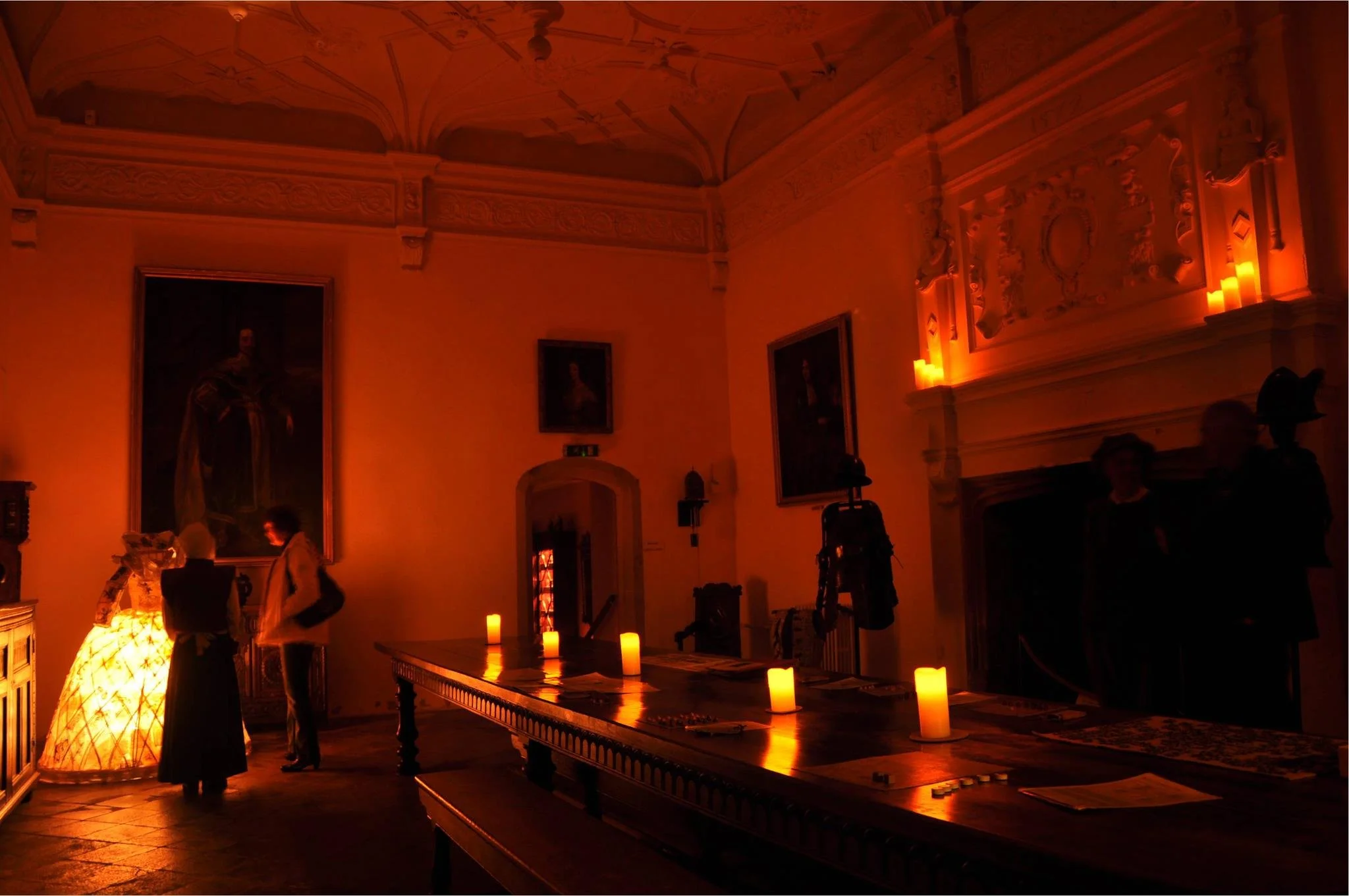
Testing a new night-time visitor model at Trerice - combining atmosphere, performance and interpretation within a structured evaluation framework.
Outcomes
The work led to a more audience-led and evidence-informed approach to events across the organisation.
It:
• Improved clarity of event purpose
• Enabled better mitigation of environmental impact
• Strengthened the balance between engagement and revenue
• Encouraged innovation grounded in each place’s character
• Advanced a culture of organisational learning and knowledge sharing
Jon’s contributions were recognised internally, leading to further involvement in advancing cross-organisational learning.
“Before this work, we relied heavily on instinct when planning events. The toolkit and mentoring gave us clarity about purpose and impact. It didn’t limit creativity — it strengthened it. We felt more confident testing new ideas because we knew how to evaluate them properly.”
Why this matters
Heritage organisations often struggle to reconcile financial pressure with conservation responsibility and authentic engagement.
This work demonstrates that innovation does not require abandoning principle - but it does require structure, evaluation and shared learning.
These principles continue to inform Eagle & Oak’s approach to programming, evaluation and organisational confidence in change.
If you are reviewing your events programme and need clarity around purpose, impact and balance, Eagle & Oak would be pleased to talk.