Building robust audience insight for a capital project
Supporting a Project Manager to develop, test and embed audience understanding for a museum transformation

Testing ideas about who a place is for, and how different audiences might connect with it, as part of a wider capital project.
Context
A museum was preparing for a significant capital project, involving both physical transformation and a major fundraising campaign. A Project Manager had been brought in to lead the project, including the development of a compelling case for support.
While experienced in managing complex projects, he had limited prior experience of developing new audience insight, beyond working with existing evaluation material. Recognising how critical audience understanding would be - both to ensure fitness-for-purpose and to demonstrate public benefit to funders - he asked Eagle & Oak to work alongside him to strengthen the project’s evidence base.
The challenge
The museum had limited existing audience data.
What was available was valuable but fragmented:
• in-depth evaluation from an externally funded touring exhibition,
• legitimately obtained postcode data from ticket sales,
• TripAdvisor and Google reviews,
• and informal observation by a small staff and volunteer team.
The challenge was not enthusiasm or intent, but structure, confidence and triangulation. The Project Manager needed to:
• make the most of what already existed,
• explore who future audiences might be,
• avoid overclaiming or speculative assumptions,
• and produce insight that would stand up to funder scrutiny.
At the same time, the work needed to leave behind practical tools and shared understanding, rather than a one-off report tied only to the capital project.
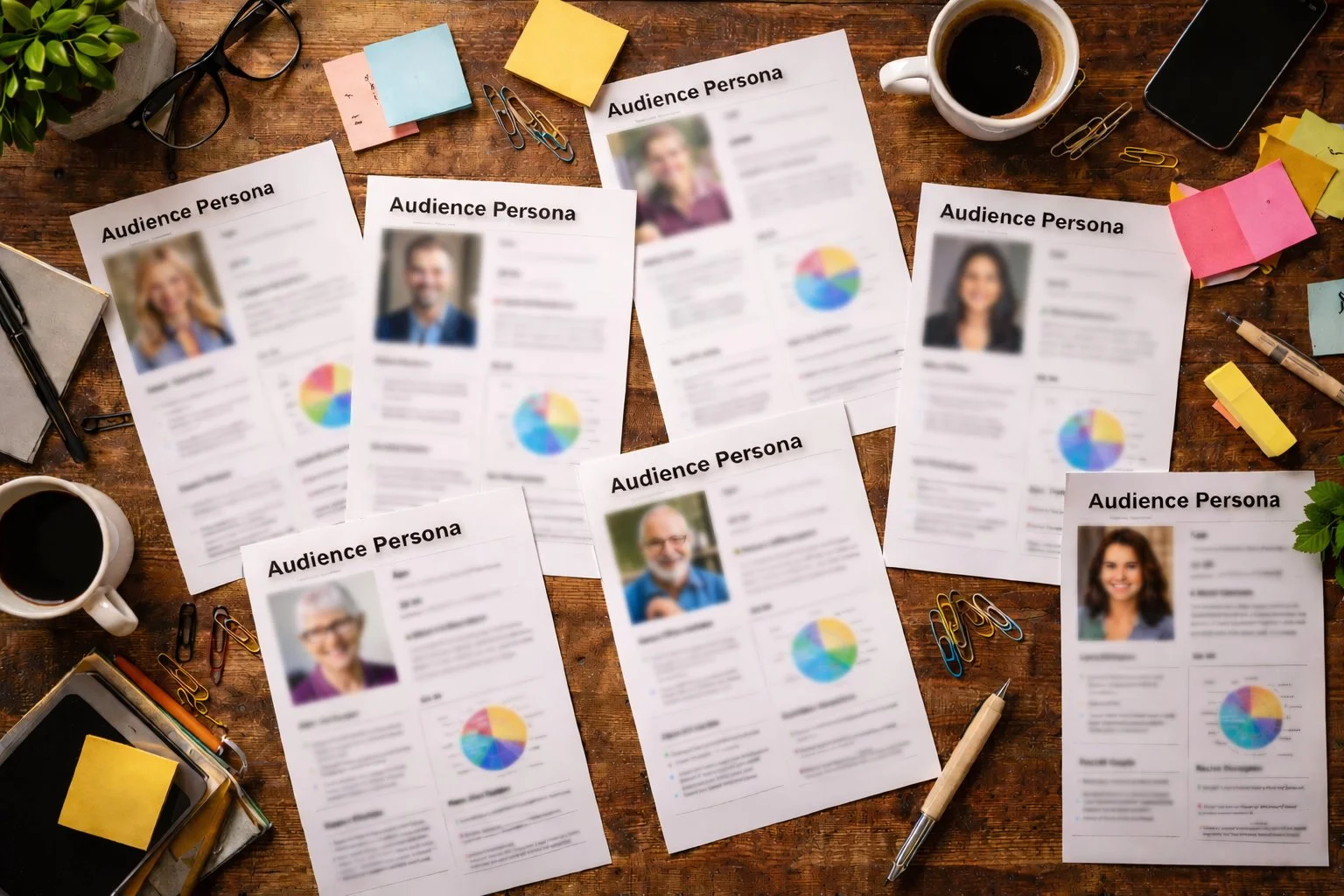
Audience personas used as working tools — drawing together data, attitudes and motivations to support practical decision-making.
“I’d worked with audience data before, but mostly in terms of using what already existed. This was the first time I’d really built audience insight from the ground up, and it completely changed how confident I felt talking to designers, colleagues and funders.”
Our approach
The work was collaborative and staged, moving deliberately from existing evidence to tested insight.
We began by working through the museum’s current data together, treating it as a legitimate foundation rather than something to be dismissed. This helped distinguish between deep but narrow insight (from the touring exhibition) and broader but lighter signals (reviews, postcodes and observation).
To explore potential audiences, Jon directed the Project Manager to the Audience Agency, enabling him to use project budget to commission a population profiling report. Working with the museum team, he used this to identify priority audience groups, and from there to develop a set of clear, usable personas.
Each persona went beyond demographics. Together, they explored:
• attitudes and motivations,
• digital behaviour and confidence,
• disposable income and price sensitivity,
• likely visit group (alone, with friends, as a couple, with children),
• and the nature of each group’s relationship - or lack of relationship - with the museum’s themes.
To test and strengthen these personas, Jon helped design a set of proportionate evaluation tools, including:
• post-visit surveys triggered via the ticketing system,
• face-to-face surveys,
• paper exit surveys with an online option,
• and structured observation sessions exploring how visitors interacted with exhibitions and displays as they currently stood.
Finally, to test emerging ideas for the transformed museum, Jon recommended specialist companies to recruit appropriate focus groups. Jon and the Project Manager worked together on session plans, stimulus materials and recording methods. Jon co-facilitated the first focus group with the Project Manager and a member of the museum team to role-model good practice, after which he had the confidence to lead the remaining sessions himself.
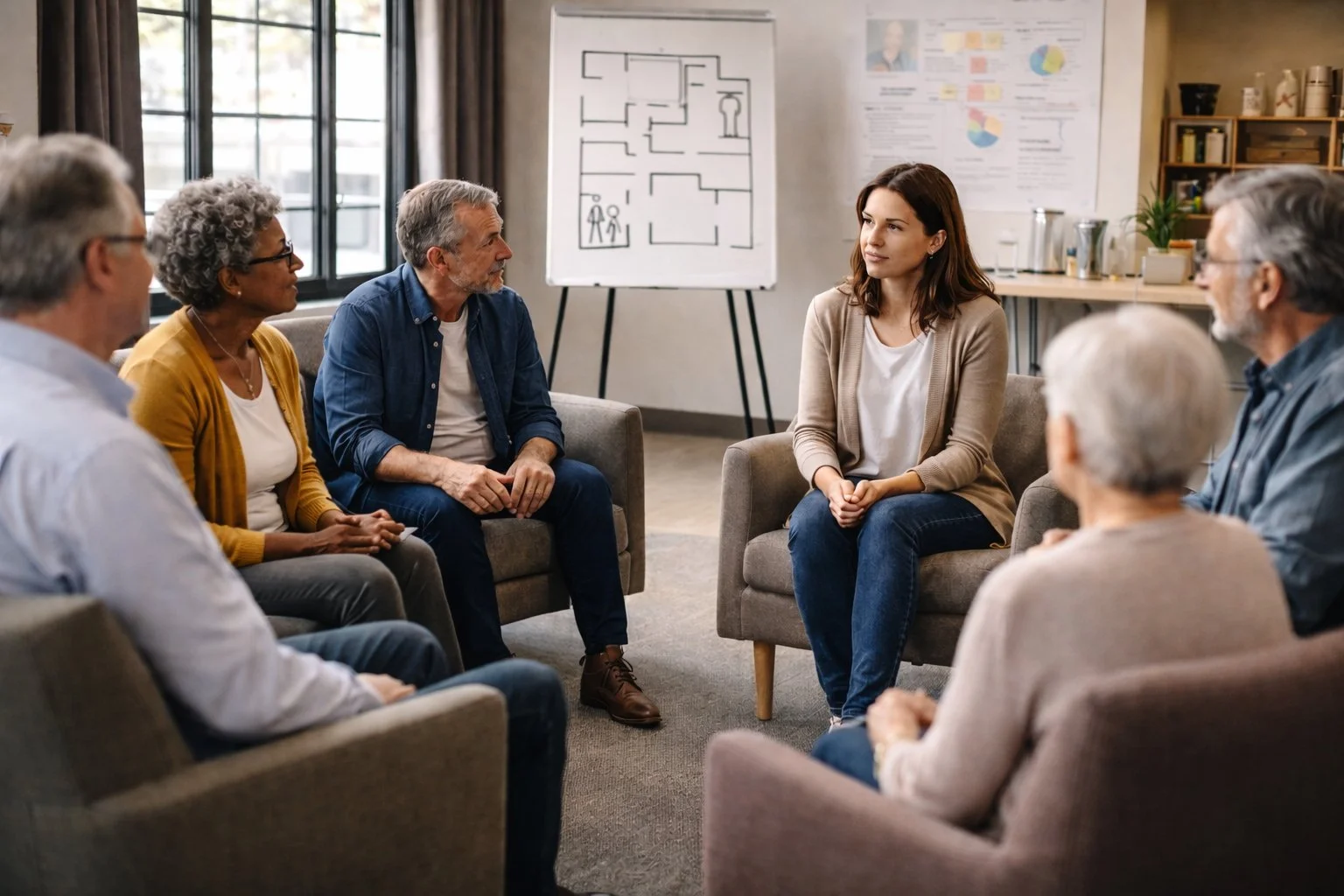
Facilitated conversations used to test assumptions, share perspectives and build confidence in emerging audience insight.
Outcomes
The combination of methods produced rich, credible and defensible audience insight.
The Project Manager and museum team developed a shared understanding of the difference between:
• assumed or theoretical audiences, and
• tested, evidence-based insight.
Audience thinking became embedded in the capital project, with further testing built into later stages. Funders who were successfully secured commented positively on the quality, robustness and clarity of the audience work.
The capital project is now complete. The Project Manager has moved on, leaving behind:
• a set of well-understood audience personas,
• practical evaluation tools scaled to the organisation’s capacity,
• and a team that thinks and talks confidently in terms of audience priorities.
Crucially, the team also understands that audiences change, and that personas should be revisited and refreshed as new insight emerges.
All of this was achieved by working alongside the Project Manager, building confidence and capability rather than outsourcing thinking.
“We stopped talking about ‘the audience’ as an abstract idea and started making decisions based on real people with real motivations. It’s changed how we think about programming, interpretation and even how we talk to each other internally.”
Why this matters
For capital projects, audience insight is often treated as a requirement rather than a resource.
This project shows how collaborative, proportionate and well-sequenced audience work can strengthen funding cases, inform design decisions and leave a lasting organisational legacy - even where starting data is limited.
If you’re planning a capital project and need audience insight that stands up to scrutiny — without overwhelming your team — let’s talk